What to Expect on Your First Roof Repair Visit
Most folks near the 36th Street Trailhead have never had a roofer out before. That’s fine. Here’s how it goes when you call DC Roofing of Arizona for roof repair.
David comes out himself. Not a sales rep, not a subcontractor. He pulls up, walks your property, and gets on the roof to look at what’s happening. Homes in this part of Tucson sit close to the desert floor where the trail meets the neighborhood, so there’s usually a layer of fine dust and grit baked into every surface. He checks for that kind of buildup around penetrations and along tile edges because it traps moisture during monsoon season.
The inspection itself covers a few key things:
- Cracked or shifted clay and concrete tiles, which are common on homes near 36th Street Trailhead
- Flashing around evaporative cooler mounts and vents
- Sealant breakdown from UV exposure and thermal cycling
- Underlayment condition beneath the tile field
That last one matters a lot out here. The sun hits hard in the 36th Street Trailhead area. There’s not much shade from the surrounding Sonoran landscape, so roofs take a beating year-round. Underlayments dry out faster than homeowners expect.
After the inspection, David tells you what he found. Straight talk. If a roof repair handles the problem, that’s what he recommends. He’s not going to push a full replacement when a targeted fix does the job. We’ve been on plenty of roofs near the trailhead where the issue turned out to be a single cracked tile letting water pool against the felt paper underneath. A quick repair, not a five-figure project.
And here’s something people don’t always think about. The houses in this neighborhood deal with runoff patterns that shift after big storms. Desert soil doesn’t absorb water the way grass does. So water sheets off the ground and sometimes backs up against foundations and lower roof edges on single-story homes. David looks at those drainage points too, because a roof repair that ignores where the water goes after it leaves the roof isn’t really solving anything.
Once you agree on the scope, the crew shows up on the scheduled day. They protect your yard, keep the site clean, and pick up after themselves. These properties near the trailhead have desert landscaping that took years to establish. Nobody wants a roofer stomping through their prickly pear.
The whole first visit usually takes about 45 minutes. You get a clear explanation, photos if needed, and a written estimate with no obligation. No pressure to decide on the spot.
But don’t wait until a monsoon storm forces the issue. Homes along the 36th Street Trailhead corridor bake under direct sun from April through October. That’s seven months of UV stress before the rain even starts. A quick roof repair now saves you from a bigger headache in August when every roofer in Tucson is booked solid.
We’re out in this area regularly. It’s a short drive from our shop on Valencia. Call us at (520) 979-9095 to set up a free estimate.
Getting to DC Roofing of Arizona from 36th Street Trailhead
Our office sits at 227 E Valencia Rd, Unit YD3, in south Tucson. From the 36th Street Trailhead area, the drive down is straightforward. Most days it takes about 20 minutes, maybe a bit longer if you hit afternoon traffic near the I-19 interchange.
Here’s the route we take every time we head between the trailhead area and our shop:
- Head east on 36th Street toward Alvernon Way.
- Turn south on Alvernon Way and follow it to Ajo Way.
- Take Ajo Way west briefly, then merge onto I-19 South.
- Exit at Valencia Road and head east.
- Our unit is on the north side of Valencia, just past the intersection with S 4th Avenue.
But here’s the thing — most folks living close to the trailhead never need to make that trip. David comes to you. We’re a service-area company, so the usual process is a phone call, then David drives up to your house for a free estimate. He knows the streets around the trailhead well. The residential blocks between Alvernon and Campbell along 36th Street keep us busy with roof repair calls, especially after monsoon season dumps debris across those older tile roofs.
When our crew heads to the 36th Street Trailhead neighborhood, we typically come up I-19 to Ajo Way, cut east on Ajo, then north on Alvernon. That puts us right in the middle of the area. The whole drive from our shop runs about 15 to 20 minutes depending on the time of day. And if there’s construction near the Ajo/I-19 junction, we’ll swing up 6th Avenue instead.
One detail worth knowing: the homes closest to the trailhead sit on streets that can be a little tricky to navigate with a loaded work truck. Some of those lots back up against the wash, so driveways are narrow and street parking fills up on weekends when hikers park along the curb. We plan around that. Our crew shows up early on weekday mornings before the trail traffic picks up, which also means cooler working conditions on the roof.
So whether you’re calling from a house on S Forgeus Avenue or one of the streets off Campbell near the trailhead entrance, we can get to you fast. The proximity is real. We’re not driving in from Phoenix or some far-flung suburb. David grew up in Tucson, the shop is in south Tucson, and the 36th Street Trailhead area is a short, easy drive north for our team. Locally rooted roofing outfits like ours are part of a bigger pattern of small contractors building staying power in their home markets, a path documented in this roofing company success story.
If you’d rather stop by in person, we’re open Monday through Saturday, 6:00 AM to 7:00 PM. But a phone call to (520) 979-9095 is the quickest way to get a roof repair estimate scheduled for your home near the trailhead.
Roofs Near 36th Street Trailhead: What Makes Them Different
The homes sitting along the streets that feed into 36th Street Trailhead aren’t cookie-cutter builds. This pocket of Tucson, tucked between the trailhead and the broader midtown grid, has a real mix of roof styles that keep our crews busy year-round.
We see a lot of these roof types near the 36th Street Trailhead area:
- Clay and concrete tile on single-family homes built from the 1960s through the 1990s
- Flat and low-slope roofs on older ranch-style houses closer to the wash
- Foam and elastomeric coatings layered over original built-up roofs
- Asphalt shingle roofs on some of the newer infill construction near Campbell Avenue
That variety matters. A roof repair on a flat-roof ranch house near the trailhead is a completely different job than fixing cracked tiles on a pitched roof two blocks south. We adjust our approach for each one because the materials, the slopes, and the failure points are all different.
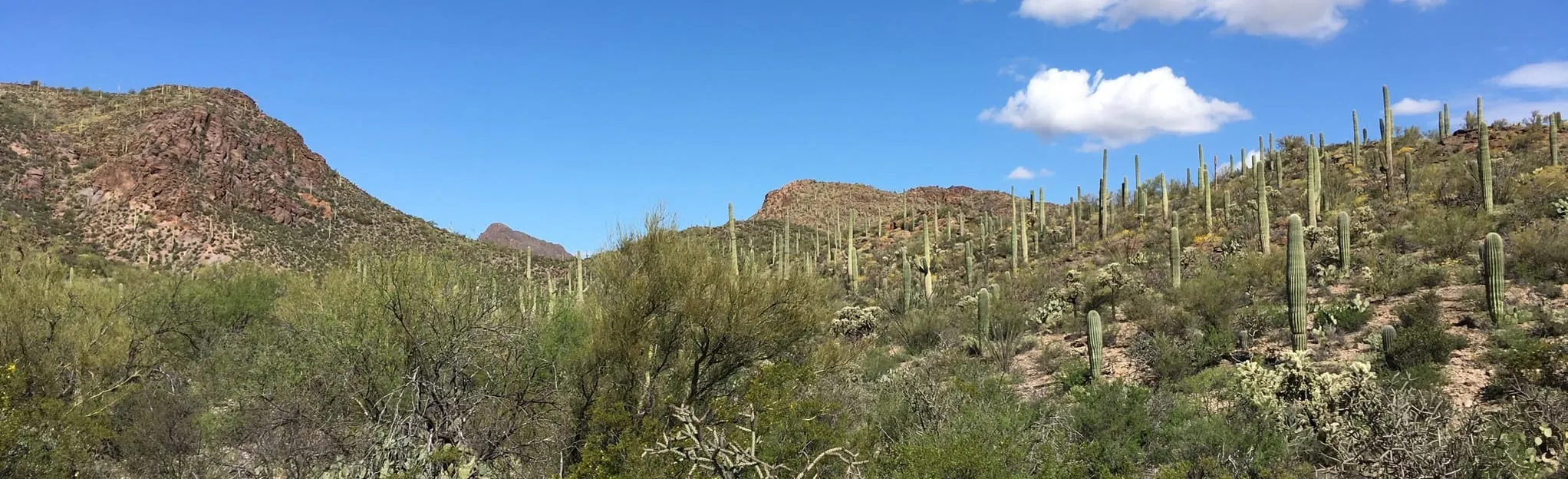
One thing most of these homes share is sun exposure. There’s not a lot of tall tree cover close to the trailhead. The desert scrub and saguaros along the trail don’t throw shade on rooftops the way mature elms or mesquites might in other Tucson neighborhoods. So roofing materials out here take a beating from UV. Sealants around vents and evaporative cooler penetrations dry out faster, tile underlayment degrades sooner, and flat roof coatings lose their reflectivity quicker than homeowners expect.
And then monsoon season hits.
Homes near the trailhead sit close to natural drainage paths. When July and August storms dump heavy rain, water moves fast across the hard desert ground. Roof repair calls from this area spike during monsoon season because wind-driven rain finds every weak spot. A cracked tile that seemed harmless in April becomes a ceiling stain in August. We’ve pulled soaked underlayment off homes within walking distance of the trailhead more times than we can count.
The other thing we notice is thermal cycling. Tucson’s desert temperature swings are hard on flashing and sealant joints. Close to the trailhead, rooftops can hit 160 degrees on a June afternoon and drop 50 degrees overnight. Metal flashing expands and contracts with every cycle, eventually pulling away from the roof surface. That’s a slow leak waiting to happen. It usually shows up as a water stain on an interior wall months after the gap first opened.
A lot of the single-family homes in this part of Tucson are owner-occupied by folks who’ve been here a while. They know their roof has some age on it. But they don’t always know what’s happening underneath the tiles or coating. That’s where an honest roof inspection makes a real difference. David goes out personally, walks the roof, and tells you what it needs. Sometimes that’s a simple roof repair on a few cracked tiles. Sometimes it’s recoating a flat section. Not every call turns into a big job.
But ignoring small problems near the trailhead is risky. The combination of relentless sun, sudden storms, and temperature swings means a minor issue can become a major one in a single season. We’d rather catch it early and save you the headache.