
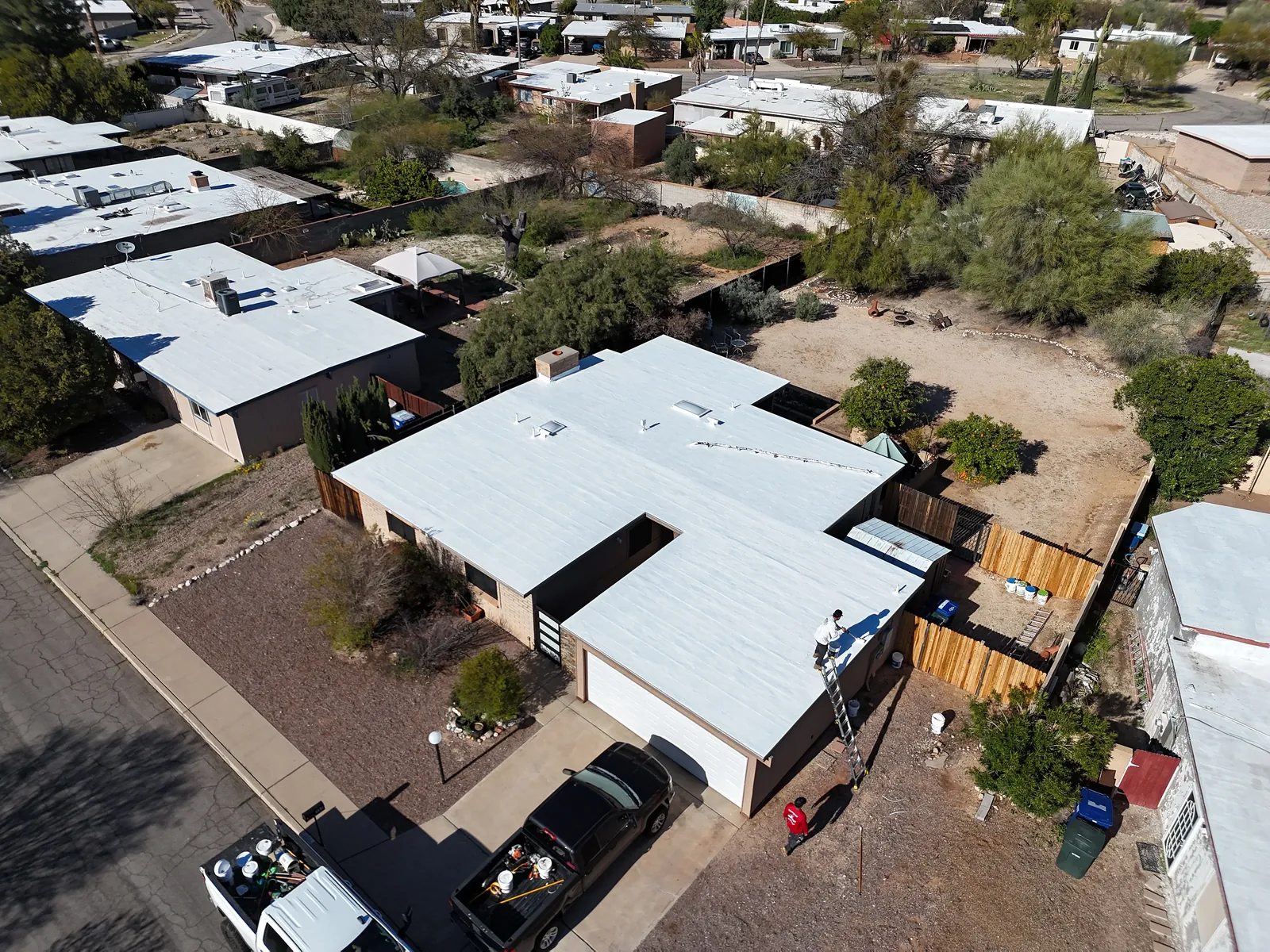
Where Manzanita Plaza Sits, and Why It Matters for Your Roof
If you live near Manzanita Plaza, you probably know it as the Safeway at the northwest corner of Valencia Road and Cardinal Avenue. Our shop is on the same road. DC Roofing of Arizona handles roof repair in Tucson out of 227 E Valencia Rd, about 4 miles east of the plaza. That’s a straight drive on Valencia, past the Santa Cruz River and I-19, usually around 10 minutes. When you call, David isn’t driving across town to find you. He’s coming down a road he drives every day.
Here’s something a lot of people around the plaza don’t realize. Your mailing address says Tucson, 85746, but you’re probably not in the City of Tucson. Pima County’s jurisdiction map puts the plaza and the neighborhoods around it in unincorporated Pima County. Fire and emergency calls go to the Drexel Heights Fire District, and Station 403 sits a little over half a mile north on Cardinal. Our shop, by comparison, is inside city limits.
Why does that matter for a roof? Because county rules apply to your house, not city rules. Pima County’s own permit guide says re-roofing with like materials doesn’t need a permit, but structural roof work does. Most repairs never get close to that line. Swapping a cracked boot seal or resetting tiles over new underlayment isn’t structural. But if we pull tiles and find framing that’s been wet for years, that’s a different conversation, and you’ll hear about it from us before anything else happens. No surprises later.
Seventy Years of Houses Within a Mile of the Plaza
Drive a mile in any direction from Valencia and Cardinal and you’ll pass houses from almost every decade since the 1950s. Pima County’s recorded subdivision plats tell the story pretty clearly:
- 1950s and 1960s: The original Drexel Heights subdivision, recorded in 1952 with 385 lots, less than a mile north of the plaza. Mission Terrace (1958 to 1964), Sunkist Acres (1963 to 1969) and El Sol Acres (1966). Parts of Sunkist Acres and El Sol Acres were laid out at about one home per acre, so you’ll see bigger lots and more room for additions.
- 1970s to mid-1980s: Las Palomas and Cardinal Estates (1972 to 1973), Salida del Sol (recorded in phases from 1972 to 1985), Westview (1979) and Mission Ridge (1980), which alone added 788 lots.
- Mid-1980s to 2005: Presidio Shadows and Presidio Villas (1984), Presidio Vista (1989) and Presidio Ridge (2005), out toward Mission Ridge Park and Miller Elementary. Mountainside Village, a manufactured-home community northwest of the plaza, was platted in phases from 1984 to 1995.
- 2023: Redford Estates (276 lots) and Saguaro Haven (143 lots), both brand new.
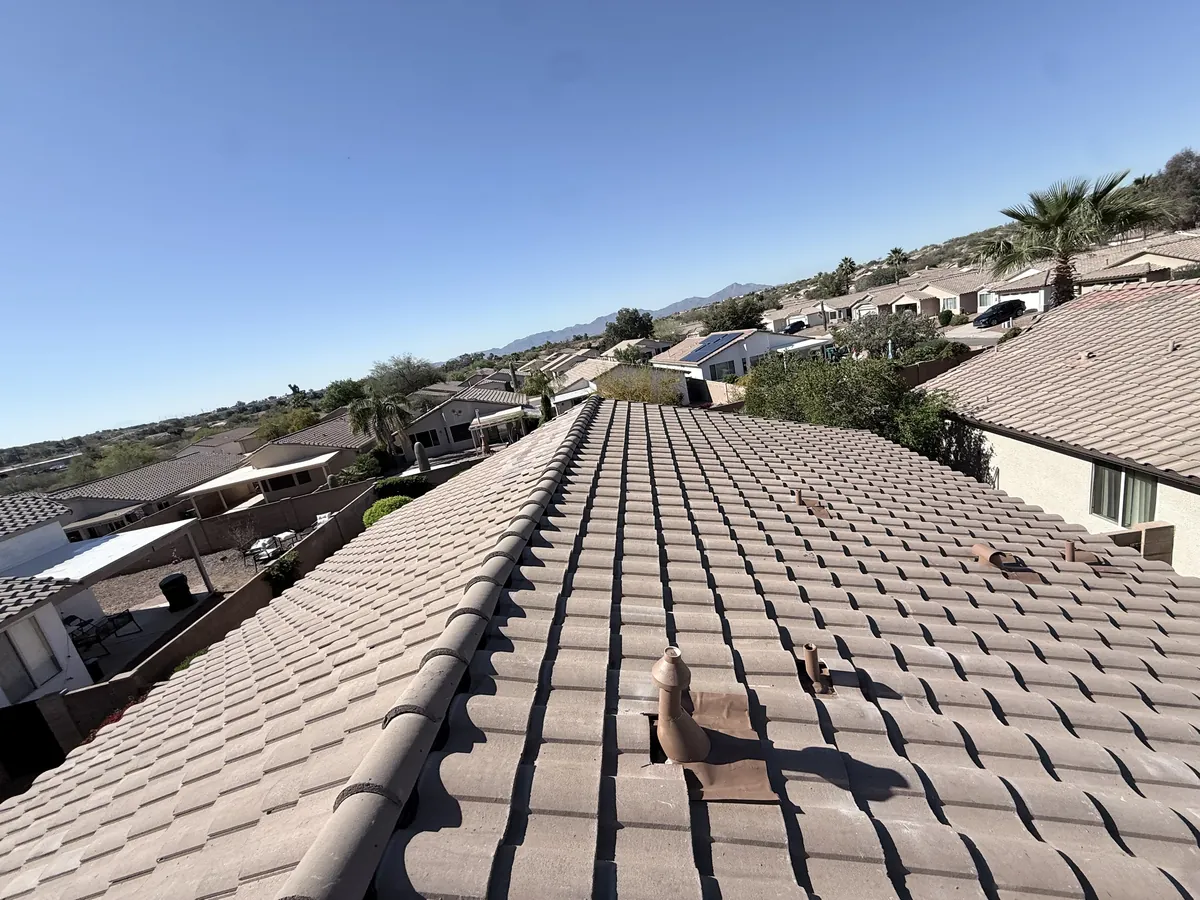
The Census numbers line up with that. In the tract that includes the plaza, the median home was built in 1979, and more than a third of the homes went up in the 1970s alone. About 78% are owner-occupied, compared with roughly 52% for the City of Tucson as a whole, according to the Census Bureau’s American Community Survey (2020 to 2024). That means a lot of people out here have owned their roof for a long time, and they’re the ones who’ll be living with whatever repair gets done.
Each era has its own wear pattern, so this is what we look for depending on when your house went up:
- The 1950s and 1960s homes: These roofs have almost certainly been redone at least once, and many have patches on top of patches. Lots of them still have a rooftop evaporative cooler. The rubber boot seal around that cooler dries out and cracks in our sun, and it’s the single most common leak we find on older Tucson homes. Additions and Arizona rooms built onto the original house add flashing seams that need a close look too.
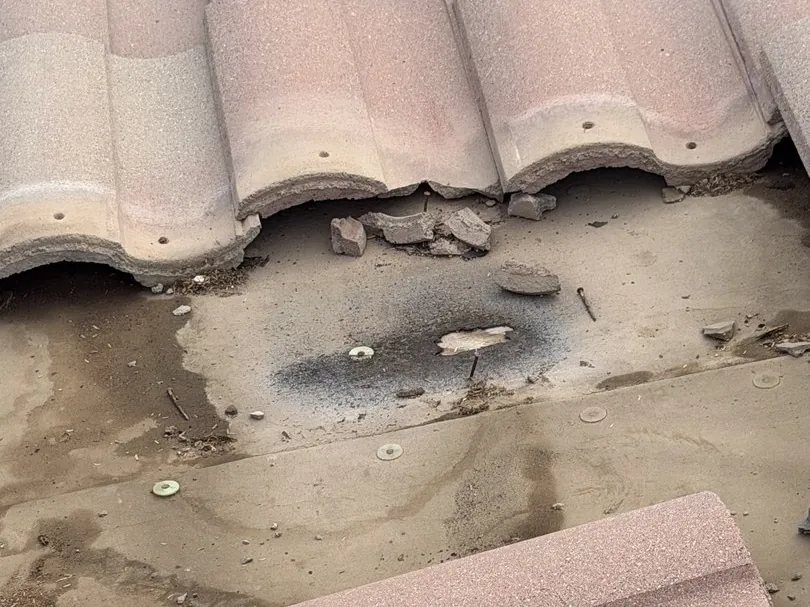
- The 1970s and early 1980s homes: At 40 to 50 years old, these are the houses where the underlayment matters most. On a tile roof, the tile is rarely the problem. The underlayment underneath breaks down from years of UV and heat cycling, and once it goes, the tiles are just sitting on a failed system. A tile can look perfect from Cardinal Avenue while the layer under it is cracked through.
- The mid-1980s to 2005 homes: Many of these are reaching the age where we start finding dried-out underlayment and tired boot seals around vents and pipes. Catching it now usually means a repair instead of a bigger job later.
- The 2023 builds: If you’re in Redford Estates or Saguaro Haven, check your builder’s warranty and call the builder first. That’s the honest answer. If their response doesn’t sit right, or the warranty’s run out, we’ll come give you a second opinion with photos.
Midvale Park’s subdivisions, like Oakmore and Cambrie, start about a mile and a half east, and the same wear patterns show up there.
One more thing about this tract: about one in six homes is a manufactured home, in communities like Mountainside Village and Cardinal Lane. If that’s yours, tell us when you call. Those roofs are built differently than a site-built house, and we’ll tell you straight whether it’s work we’re the right fit for.
What Monsoon Season Does to Roofs Out Here
Tucson’s official weather readings come from Tucson International Airport, about 5 miles east of the plaza. So the numbers the National Weather Service publishes are about as close to your street as official numbers get. According to the NWS Tucson office, a normal monsoon season (June 15 through September 30) brings 6.06 inches of rain. The driest season on record measured 1.59 inches. The wettest measured 13.84.
That swing is the problem. A roof can go two quiet summers without a drip and then get hammered in the third. And monsoon rain doesn’t ease in. It hits. If you’ve watched Valencia Wash running right by the plaza after a July storm, you’ve seen how much water comes down in a short burst. That’s the kind of rain that finds a cracked cooler boot, a lifted flashing edge, or a soft spot in the underlayment.
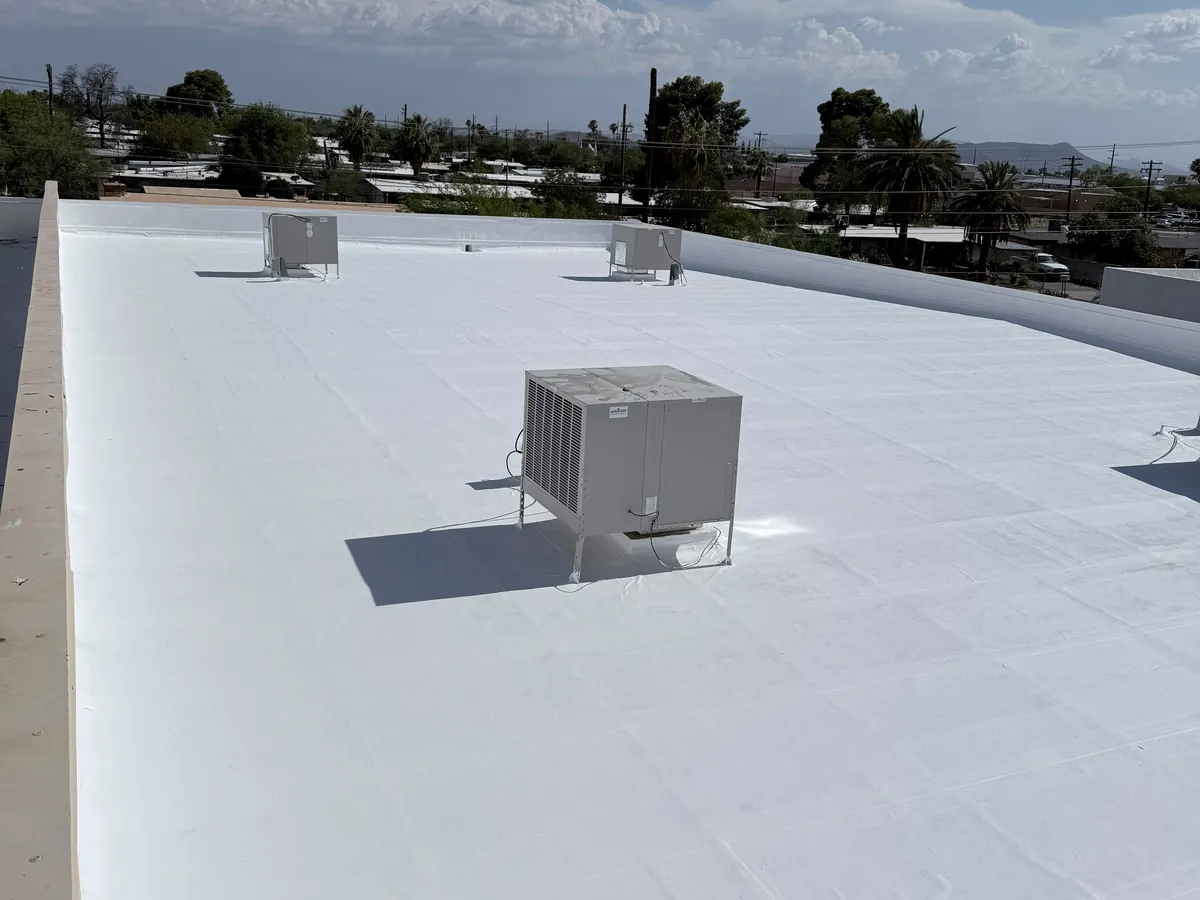
The heat does the slow damage in between. Roof surfaces can hit 160 degrees on a summer afternoon and cool way down overnight. That expansion and contraction happens day after day from spring through fall, and it’s what dries out rubber seals and breaks down underlayment on the older homes around here.
A few things worth knowing when a storm does damage:
- Take photos before anything gets fixed. Homeowner’s insurance typically covers sudden storm damage like wind, hail, or debris, but not gradual wear. Pictures help.
- We work with your adjuster. We document the damage for your claim, we don’t work on contingency, and there’s no separate fee for the paperwork.
- Flat roof work waits for dry weather. David won’t apply a coating or do flat roof work if there’s any chance of rain. During monsoon season that can mean waiting a day or two for a clear window. It’s a quality rule, not a convenience thing.
How a Repair Works for Homes Near Valencia and Cardinal
David Contreras has been roofing in Tucson since 2011 and founded DC Roofing of Arizona in 2020. He’s on every job, and the crew on your roof works for him. No sales reps, no subcontractors. The company holds Arizona ROC license #328733 and is bonded and insured, with general liability coverage of $1M per occurrence and $2M aggregate. It has completed over 800 roofs, and about 90% of them have been tile, so the tile-and-underlayment problems common on 1970s and 1980s homes near the plaza are the work we do most.
Here’s how a repair goes with us:
- You call or text. A real person answers, often David. You get a same-day response, and the inspection is usually booked within a day or two.
- Someone actually gets on the roof. Not a glance from the driveway. The inspection takes about 45 minutes on most homes and covers tiles, underlayment, flashing, every penetration including evaporative coolers, and the decking. It’s documented with photos and it’s free.
- You get a straight diagnosis. If a repair will hold, that’s what we recommend. If the damage runs deeper, we tell you that too. You get a written estimate with line-item pricing.
- The work usually takes a day. Most standard repairs on tile or flat roofs are done in one day, sometimes less. Summer jobs start early in the morning to beat the heat.
- Cleanup and a check. Debris gets cleared, the yard gets a magnet sweep for nails, and the repair gets verified, with a water test if needed. Then we walk you through what was done.
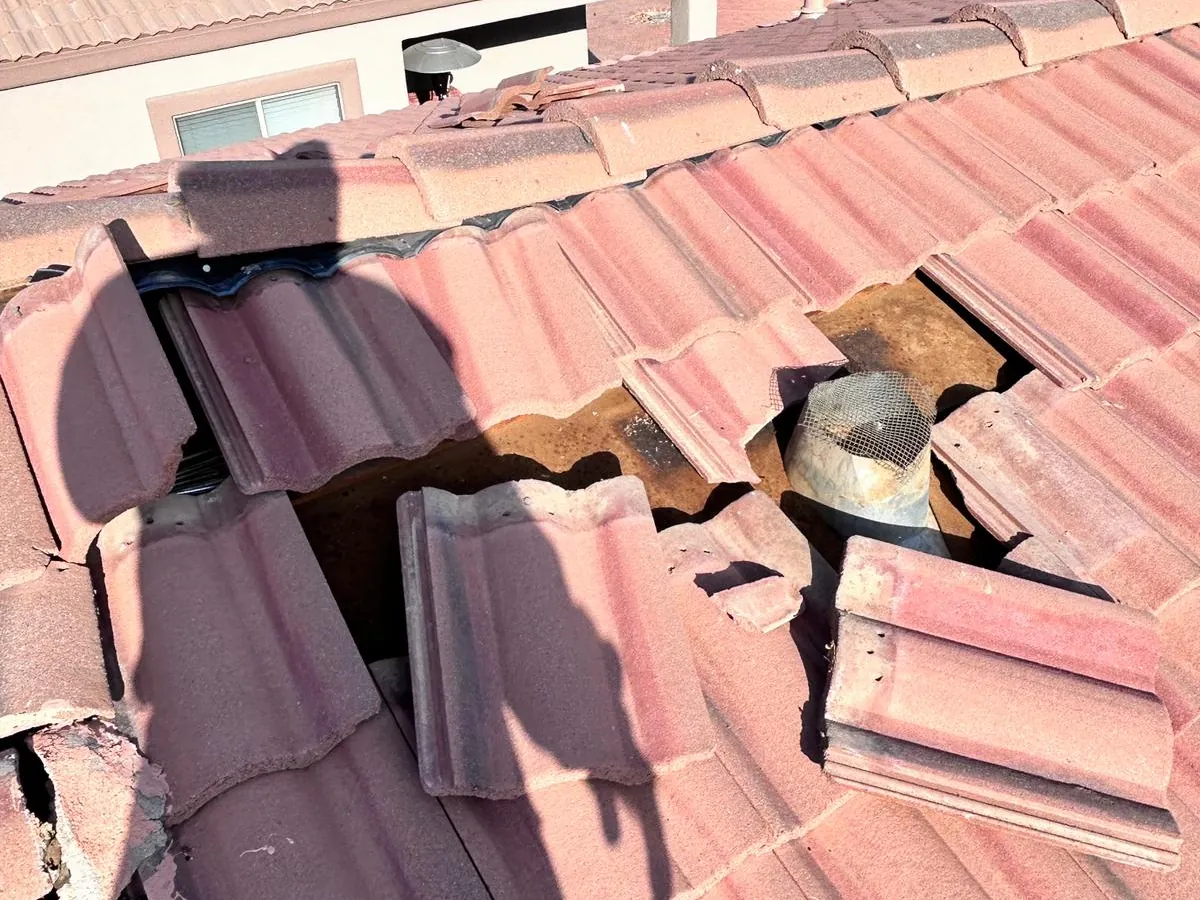
On pricing, the honest answer is that nobody can give you a real number without getting up there. As a general range, a fresh leak caught early (a boot seal, cracked flashing, a few tiles) typically runs $300 to $600. A leak that’s been active through a monsoon season or two usually has soaked the underlayment and decking, and that can push it to $1,200 to $3,500 or more. It’s the hidden moisture, not the leak itself, that drives the bill up.
A few things that are included, and a few that aren’t:
- Included: Up to 5 sheets of decking replacement at no extra charge, a 2-year labor warranty on the repair, and free annual inspections after the job. A lot of homeowners have David out before and after monsoon season every year.
- Not included: Interior drywall, ceiling, or paint repair. That’s a separate trade.
- Worth knowing: A repair stops water at the entry point. But if water has already traveled along the underlayment or plywood seams, some of that damage can show up somewhere else later. We tell you that upfront.
If you’ve got a ceiling stain, a slipped tile, or a cooler that’s been dripping since the last storm, you don’t need to know what’s wrong before you call. Tell us what you’re seeing and where you are. If you’re near Valencia and Cardinal, we’re about 10 minutes away. Call (520) 979-9095.