
The Neighborhood Around the Park
If you’ve spent a Saturday at the ball fields, the BMX track, or Manzanita Pool, you know Winston Reynolds-Manzanita Park. The Pima County park at 5200 S Westover Ave is also home to the Drexel Heights Community Center, and it sits in the middle of neighborhoods that go back to the 1950s.
Those neighborhoods have Tucson addresses, but they’re not in the City of Tucson. They’re unincorporated Pima County, covered by the Drexel Heights Fire District. For your roof, that means the county’s rules apply: re-roofing with like materials doesn’t need a county permit, but structural roof work does.
Our shop is at 227 E Valencia Rd, about 5.5 miles away. The usual drive heads east to Mission Road, over to Midvale Park Road, then down to Valencia and east to the shop. Call it 15 minutes. When you call us about residential roof repair, David drives out to you, and he knows the way.
Manzanita Manor, Manzanita Terrace, and the Streets Around Them
Pima County’s subdivision records show how this part of town filled in. Within about a mile of the park:
- The 1950s: Garden City (1950 and 1956), the original Drexel Heights subdivision (1952, with 385 lots), and Foothills Ranchos (1957).
- The 1960s: Manzanita Manor, recorded in four phases from 1958 to 1970 with about 335 lots in all, plus Sunkist Acres (1960 to 1961) and Lomas Saenz (1960).
- The 1970s: Manzanita Terrace, the biggest of them, recorded in phases from 1972 to 1976 with about 570 lots. Mountain Park Estates (1973) and a second Lomas Saenz phase (1974) came in around the same time.
- Later infill: Mountain Manor View (1996), Tres Leones (2000), and Dakota Vista (2019).
The Census Bureau’s estimates for the block group around the park line up with those dates. The median home was built in 1975, and about three out of four homes went up in the 1960s or 1970s. About 82% are single-family houses, about 14% are manufactured homes, and the estimates put owner-occupancy above 90%. People here tend to stay, which means a lot of these roofs have one owner’s whole history on them.
That history is what we look for when we get up there:
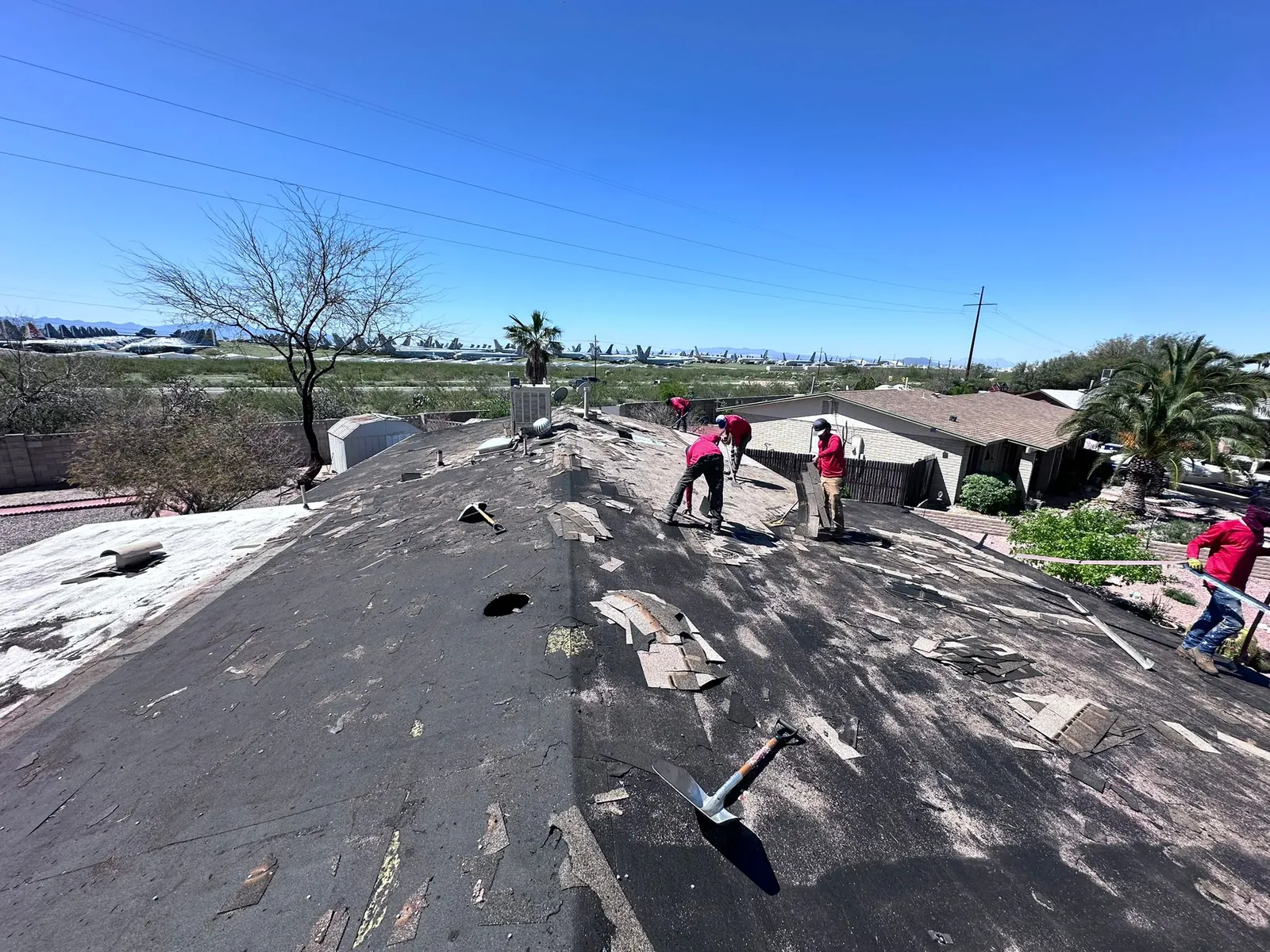
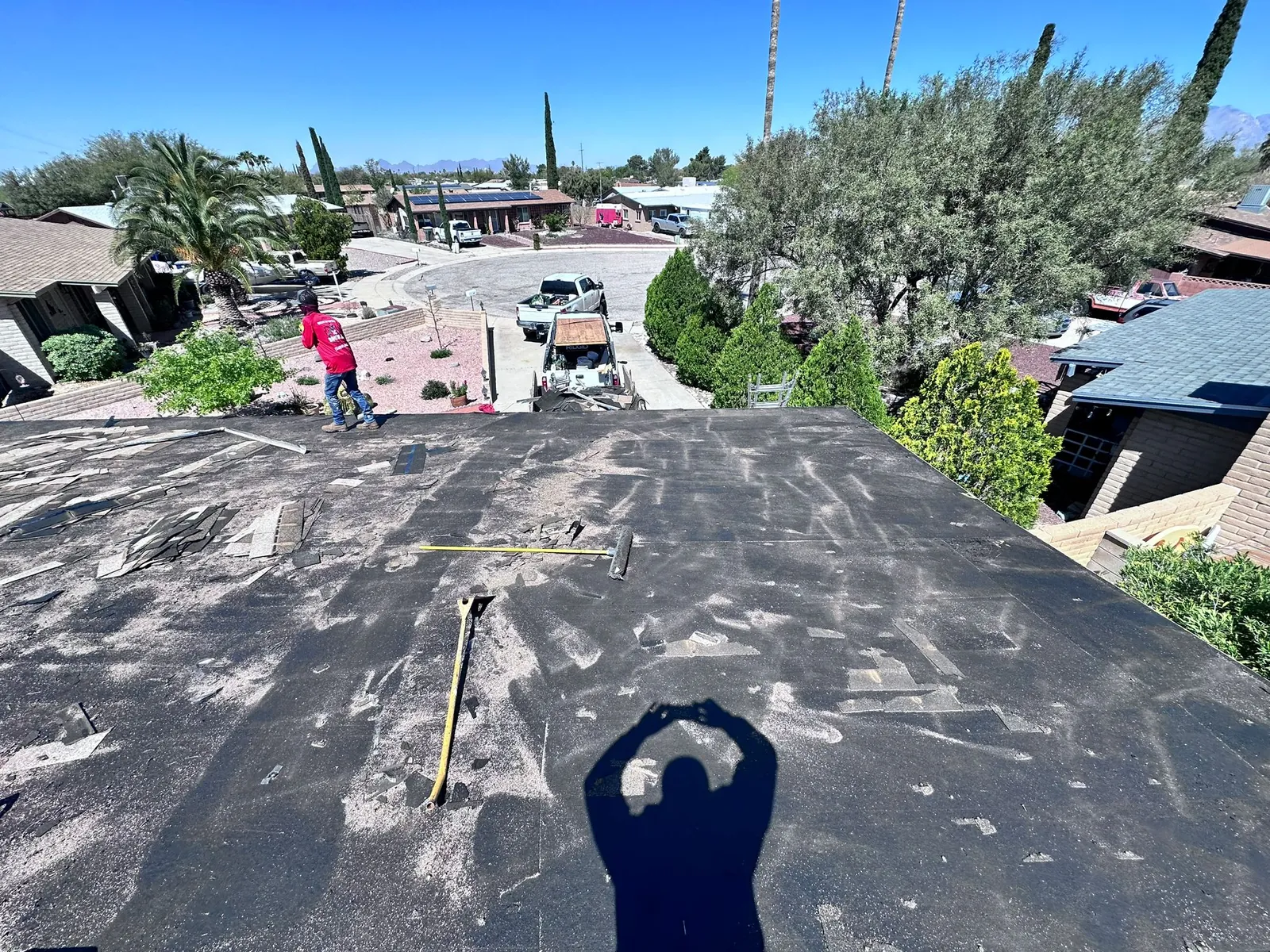
- Layers of old work. A house from 1958 or 1965 has been through a lot of roofers. It’s common to find patches from several different decades, each one done a little differently. Part of a good inspection is figuring out what’s original, what’s been redone, and what’s been covered over.
- Rooftop coolers. Plenty of homes this age still run an evaporative cooler on the roof. The rubber boot seal around it dries out and cracks in the sun, and it’s the most common leak we find on older Tucson homes.
- Additions. Arizona rooms, carports, and back additions built onto the original house add flat or low-slope sections and new seams where the old roof meets the new one. Those transitions get a close look every time.
- Big lots and big trees. Foothills Ranchos, Lomas Saenz, and parts of Sunkist Acres were laid out at about one home per acre. Bigger lots often mean bigger trees, and branches that touch the roof scrape it in the wind and fill the valleys with debris. We’ll point those out, and David has trimmed them back on past jobs.
About those manufactured homes: if yours is one, mention it when you call. Those roofs are built differently than a site-built house, and we’ll tell you straight whether it’s work we’re the right fit for.
Washes, Storms, and Flat Roof Sections
West Nebraska Wash runs right along the park, and Dakota Wash and West Wyoming Wash are a few blocks away. Anyone who’s lived here a while knows what those look like when a monsoon storm opens up. Monsoon rain comes hard and fast, and the National Weather Service’s records for Tucson show how much it swings: the driest season on record brought 1.59 inches, and the wettest brought 13.84.
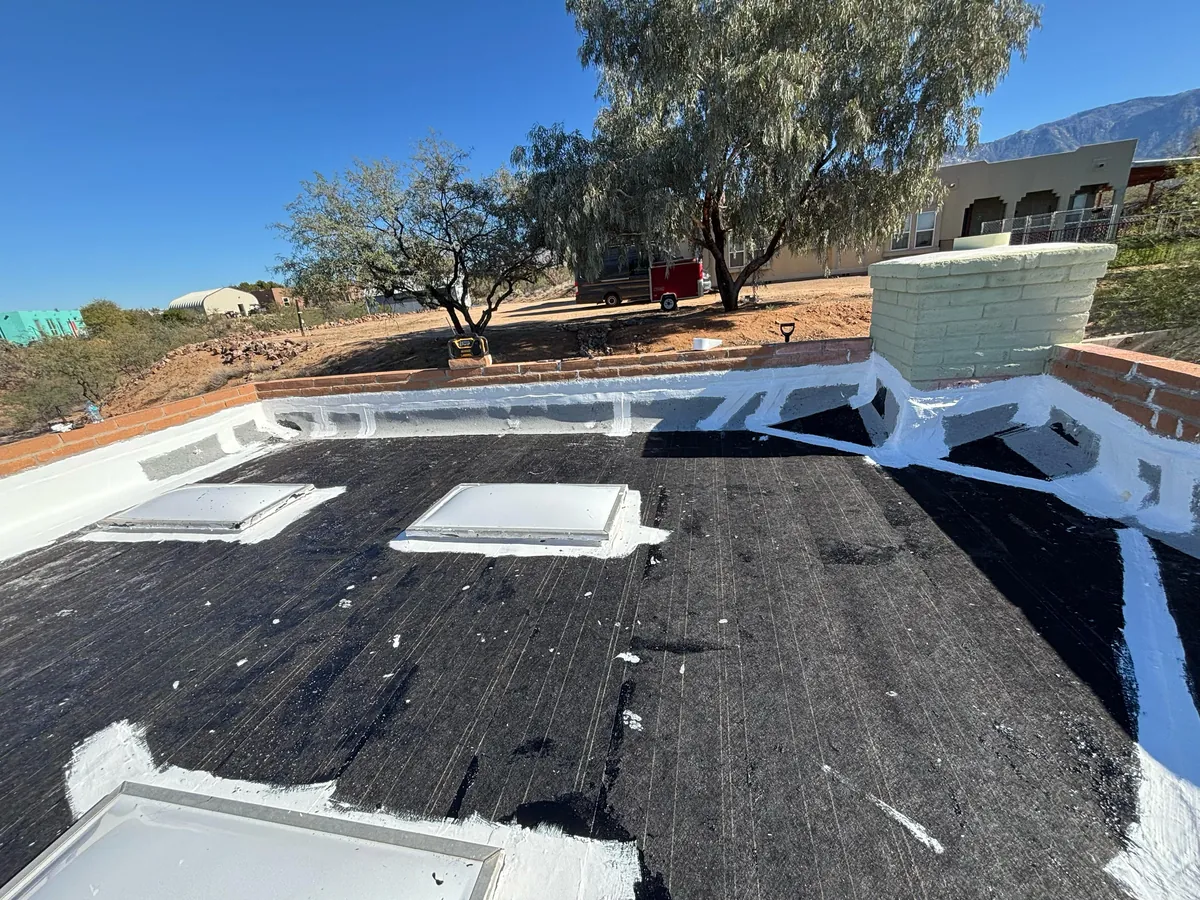
That swing is hard on older roofs, and it’s hardest on flat and low-slope sections. Water that sits after a storm finds every weak seam in an aging coating. A flat roof coating needs to be redone every 4 to 5 years no matter how well it was applied the first time, so if nobody can remember when yours was last coated, it’s probably due.
Timing matters on that kind of work. David won’t apply a coating or do flat roof work if there’s any chance of rain. During monsoon season, that sometimes means waiting a day or two for a clear window. That’s on purpose. A coating that gets rained on before it cures doesn’t last.
If a storm damages your roof, get photos before anything gets moved or patched. Insurance generally covers sudden damage from wind, hail, or debris, not slow wear. We document the damage for your adjuster, we don’t work on contingency, and there’s no extra charge for the paperwork.
Repair or Replace on a 60-Year-Old House
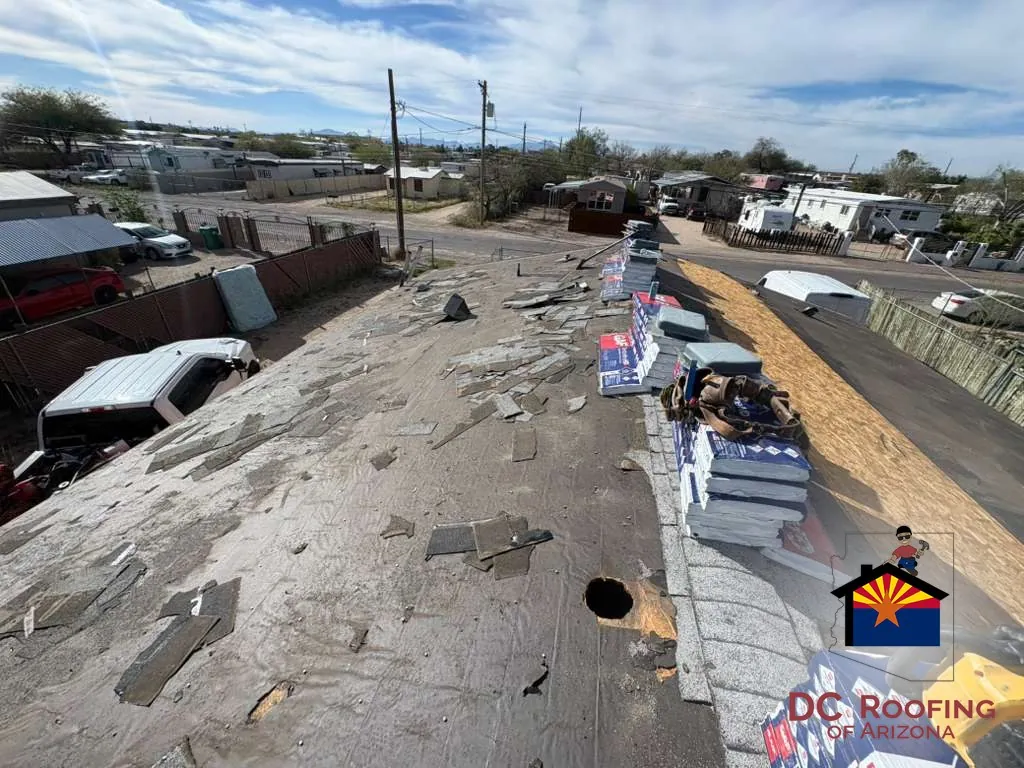
This is the question we get most on homes this age, and the honest answer is that the age alone doesn’t decide it. What’s under the surface does. If the underlayment and decking are still sound, a targeted repair can hold for years. If water has been getting in through a few monsoon seasons, it’s usually soaked into the underlayment and plywood, and patching the top won’t stop it.
David will tell you which one you’re looking at. He walks the roof himself, and the inspection is free and documented with photos. He’s been roofing in Tucson since 2011 and founded DC Roofing of Arizona in 2020, and the crew that does the work is his own, never subcontractors. The company holds Arizona ROC license #328733 and is bonded and insured, with $1M per occurrence and $2M aggregate in general liability coverage.
As a general range, a fresh leak caught early, like a boot seal or a bit of flashing, typically runs $300 to $600. A leak that’s been active for a season or two can run $1,200 to $3,500 or more, because the hidden moisture damage is what drives the cost. Repairs carry a 2-year labor warranty, the contract includes up to 5 sheets of decking at no extra charge, and interior drywall or ceiling repair isn’t included.
And if the roof really is at the end of its life, you’ll hear that straight, with the photos to show why. Call (520) 979-9095.