David Contreras, owner of DC Roofing of Arizona, has been applying and restoring roof coatings in Tucson since 2011, and he's the one who walks every Vail roof we estimate. A coating is a protection step for flat and low-slope roofs that are still sound underneath. This page covers what a coating does and doesn't do, what the desert does to one, the signs it's time for a new coat, and how we do the work. We're licensed, bonded, and insured (ROC #328733), and if a repair is the right answer instead, that's what we'll tell you.
What Roof Coating Does, and What It Doesn't
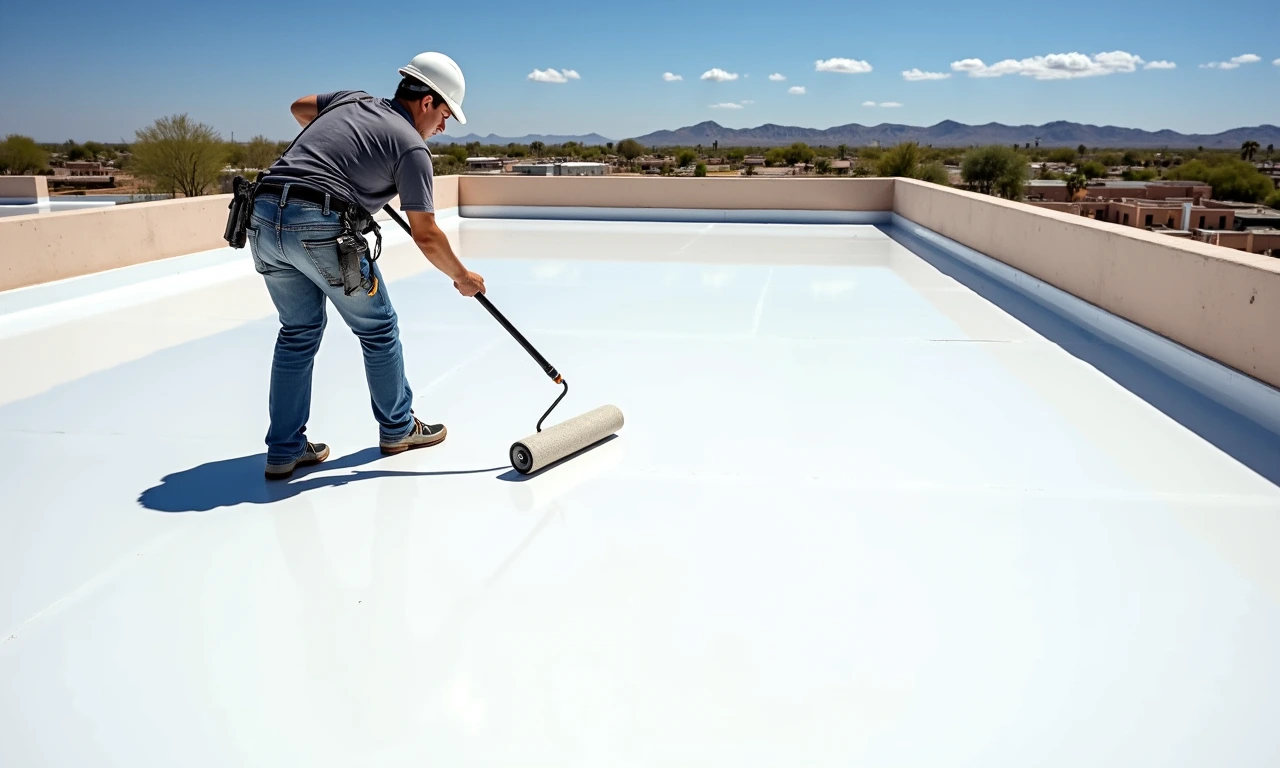
Most people picture paint. That's the wrong picture. A roof coating goes on thick, cures into a flexible membrane, and bonds to the surface underneath as one continuous sheet. That seamless part matters more than anything else. Roofs rarely leak in the middle of a big open field of material. They leak at the edges, around vent pipes, at parapet walls, and at the old evaporative cooler curb nobody has touched in years. A coating covers all of those in one pass, with no laps to peel and no fasteners to back out.
Here's what it's doing up there, day after day:
- Waterproofing: it seals seams, cracks, and penetrations so monsoon rain runs off instead of soaking in
- Reflectivity: light-colored coatings bounce sunlight back instead of soaking it into the roof
- Flexibility: it stretches and shrinks with the roof as temperatures swing
- UV shielding: it takes the sun damage so the surface underneath doesn't
- Small-crack repair: it bridges hairline cracks before they turn into real leaks
On the heat side, ENERGY STAR explains that lighter-colored or reflective roofs stay cooler than roofs that absorb sunlight, and it cites Berkeley Lab's figure that a clean white roof reflecting 80% of sunlight stays about 50°F cooler than a gray roof reflecting 20%. Cooler roof materials also tend to age more slowly.
So does a coating fix a roof that's already falling apart? No, and be wary of anyone who says it will. Coating works on a roof with a sound deck and sound structure underneath. It's protection and extension, not resurrection. It also isn't for tile roofs, which work differently. If your Vail home has a tile main roof and a flat section over a patio or an addition, that flat section is the part a coating is for. And no coating is permanent: coatings need to go back on every four to six years, no matter who installs them.
Why the Desert Wears Coatings Down
A coating doesn't usually fail because it was bad. It fails because the desert is hard on anything sitting out in the open. Here's what wears a coated roof down around Vail:
- Constant UV exposure, which chalks the surface and thins the membrane year after year
- Thermal cycling: Berkeley Lab reports that dark roofs can reach 150°F or higher in the summer sun, and then they cool off at night, so the coating stretches and pulls back every single day
- Monsoon storms from mid-June through September that drive rain sideways into seams, parapets, and flashing
- Wind-blown grit and debris that scours the top layer
- Ponding water on low-slope roofs where the slope has settled or a drain is clogged
- Evaporative cooler penetrations, which leak right where the coating has to seal around metal
Ponding is the one to watch. NRCA guidance treats water that stays on a membrane roof for more than 48 hours after rain as something that can damage the roof assembly. If the same low spot is still holding water two days after a storm, that's a drainage problem to fix before anyone talks about coating over it.
The type of coating matters too, especially where water sits. Silicone is our top choice for most flat roofs because it's highly UV-resistant, stays flexible across big temperature swings, and handles ponding better than the alternatives. Elastomeric is a cost-effective option for low-slope roofs with minimal ponding, but it degrades faster in standing water. Acrylic is the most budget-friendly and works where drainage is consistent, but it isn't recommended where ponding is an issue. Our pages on silicone roof coating and elastomeric roof coating go into each one.
None of this makes a coating a bad investment. It's still one of the smartest ways to protect a flat or low-slope roof in this climate. It just needs honest expectations attached: a coating is a maintained system, not a one-time fix you forget about.
Signs Your Roof Needs Coating: Three Common Scenarios
Most people don't think about roof coating until something looks wrong, but the roofs that get coated at the right time last longer than the ones that wait. These are the three situations that come up most.
Scenario one: the coating you already have is chalking. If you can safely get onto a flat or low-slope roof that was coated years ago, run your hand across it. If your palm comes back white and dusty, that's chalking. The sun has been eating the top layer, and the reflective layer is wearing out. It's still doing its job, but it's thinning. This is the best time to recoat: the surface below is still sound, prep is simple, and you're renewing protection instead of repairing damage.
Scenario two: you've got ponding, cracks, or blisters. A roof moves around a lot in this climate, and eventually something gives. From up top, that looks like:
- Hairline cracks spidering out from seams or parapet walls
- Small bubbles or blisters where the old coating has lifted off the surface
- Water sitting in the same low spot more than 48 hours after rain
- Bare spots where the coating has worn away and the membrane or foam shows through, usually on the south-facing side
- Staining or soft spots around an evaporative cooler base or a vent pipe
Any one of those is fixable. Two or three together means the roof needs a real look before anyone talks about coating.
Scenario three: nothing looks wrong, but the house runs hot. A dark, old flat roof soaks up heat all day. ENERGY STAR notes that cool roofs can lower air-conditioning costs and work best in hot, sunny climates, though how much a coating helps your house depends on the roof, the insulation, and the product. A coating isn't always the answer, and plenty of roofs sit somewhere between two of these scenarios. That's what an inspection sorts out.
One last thing worth saying plainly: coating is a protection step, not a repair step. If the deck underneath is wet or rotted, coating over it just hides the problem for a season. We'd rather tell you that in April than have you find out during the first big storm in July.
What a Coating Job Looks Like With Us
It starts with a free inspection. David walks the roof and checks the membrane, the seams, the penetrations, and the drainage, and he looks for ponding. When it's needed we moisture-test the roof with infrared scans or core samples, because wet insulation under the membrane is a deal-breaker: coating over trapped moisture locks it in and speeds up rot. If your roof isn't a good candidate for coating, we'll tell you that and recommend what actually makes sense, whether that's a flat roof repair or something else.
When a coating is the right call, we pressure wash the whole surface, repair any cracks, open seams, or damaged flashing before any coating goes down, apply primer where the surface needs it, and then apply the coating in even, measured passes at the right thickness. Too thin and it won't protect. Too thick in one spot and it pools. A residential flat roof typically takes one to two days, depending on size and conditions. We walk every square foot afterward, register the manufacturer's warranty for you, and clean up completely. Our coating jobs carry a 5-year warranty.
Timing matters here. The best window for coating is February through early May: the surface is warm but not scorching, and the coating gets 24 to 48 hours of dry weather to cure before monsoon season starts in mid-June. We get a rush of calls in late June from homeowners who spot a stain as the first storm rolls in, so it pays to plan ahead. Our roof coating service page covers the process and materials in more detail, and a roof inspection is the right place to start if you're not sure what you have.
FAQ: Roof Coating in Vail
How do I know if my roof needs coating or if it's already too far gone?
Look for chalky, faded coating and hairline cracks that haven't turned into leaks yet. That usually means a coating can still protect the roof. If the deck is soft or sagging, the insulation is wet, or the roof is already leaking in multiple spots, coating won't fix that damage and the roof needs repair first. A free inspection tells you which situation you're in.
Can I coat my own roof, or should I call a professional?
You can buy coating products, but the coating is the last step, not the first. Getting it right means checking for wet insulation and soft spots, cleaning the surface, repairing seams and penetrations, priming where needed, and applying the coating at the right thickness. Skip a step and you get a coating that looks fine for a season, then fails at the spots that matter most, like vent boots and parapet walls. We'd rather you got a free inspection first.
Is roof coating the same thing as painting my roof?
No, and it's the biggest misconception people have. Paint sits on the surface. A roof coating cures into a flexible, seamless membrane that bonds to the roof and stretches with it as temperatures swing. It seals seams and cracks instead of just covering them up, and that difference is what helps keep water out during monsoon storms.
How long does a roof coating last, and how often does it need to be redone?
Coatings need to go back on every four to six years, no matter who installs them, and our coating jobs carry a 5-year warranty. How long yours lasts depends on the product, how thick it was applied, how well the roof was prepped, and whether water ponds on it. Chalky or thin spots and small cracks are signs it's due, and catching it at that stage means a recoat instead of a repair.
When is the best time of year to coat a roof in Vail?
February through early May is the best window. The surface is warm but not scorching, and the coating needs 24 to 48 hours without rain or heavy dew to cure, which gets harder to count on once monsoon season starts in mid-June. If your coating is already failing, don't wait until fall, since driving rain hits a weakened coating hard.
Can you coat a roof that is already leaking?
Not until the leak source is found and repaired and the roof is dry. Coating over an active leak or wet insulation traps moisture in the roof, which speeds up rot and membrane failure. The right sequence is to find the leak, repair it, let the roof dry, and then coat.
Can you coat a tile roof?
No. Roof coating is for flat and low-slope roofs, and tile roofs work differently and don't benefit from a surface coating. If your Vail home has a tile main roof with a flat section over a patio or addition, that flat section may be a candidate, and we'll tell you which parts of your roof are which during the inspection.
Is DC Roofing of Arizona insured to work in Vail?
Yes. We're licensed (ROC #328733), bonded, and insured in Arizona, and we carry liability insurance and workers' compensation coverage on every job.