
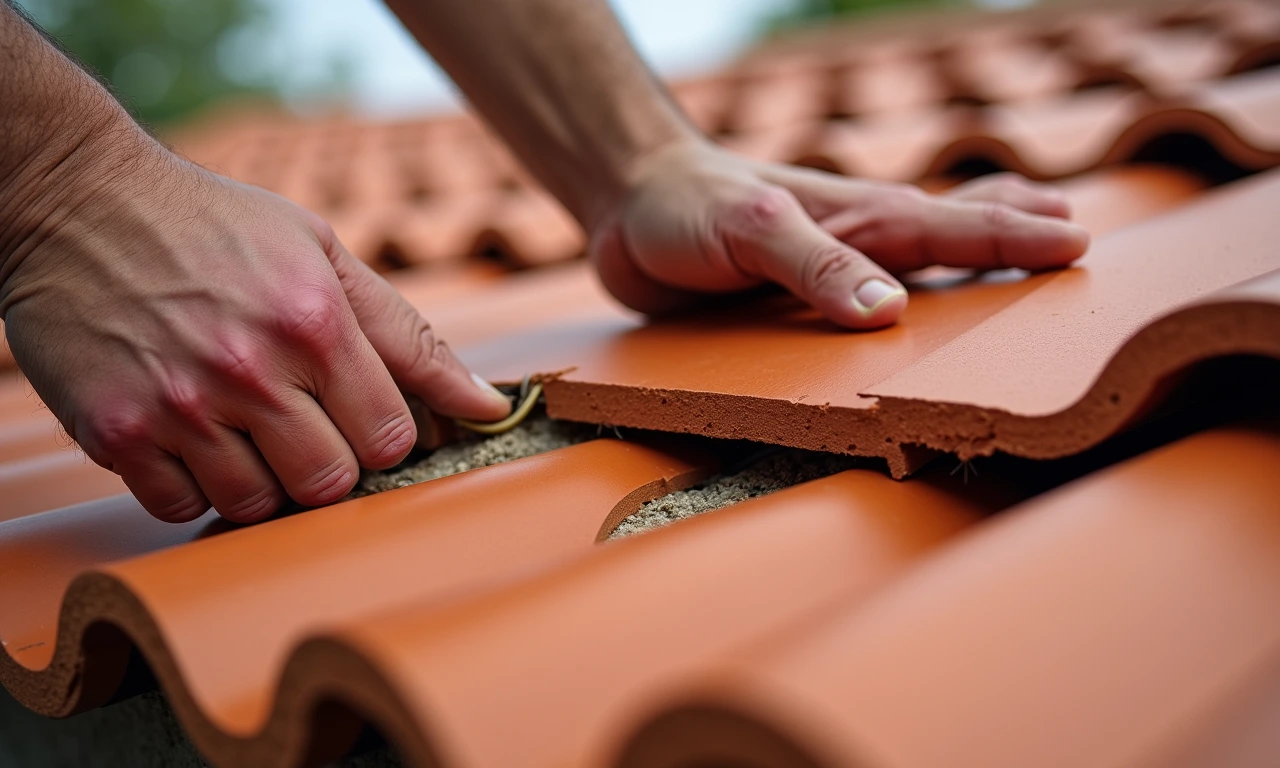
Expert Tile Roof Services for Tucson & Southern Arizona
David Contreras, owner of DC Roofing of Arizona, has been repairing tile roofs in Tucson since 2011 - through hundreds of monsoon seasons and the relentless thermal cycling that the Sonoran Desert delivers year-round. Clay and concrete tile roofs dominate Southern Arizona, and so do the specific failure patterns Tucson's heat and storms create beneath them. Licensed under ROC #328733, DC Roofing of Arizona has completed over 800 roofs across Tucson and knows exactly what this climate does to every layer of a tile roof system.
Watch: DC Roofing of Arizona in Action
What Tile Roof Repair in Tucson Actually Involves
Most people picture someone just swapping out a cracked tile. That's part of it - but the work goes deeper than what you can see from the ground. The tile itself is really just the outer shell. Underneath it, you've got underlayment, flashing around penetrations, and sometimes foam or mortar bedding holding tiles in place. When something fails, it's usually not the tile alone. It's what's happening beneath it. We see that every week on homes across the Catalina Foothills and all through midtown Tucson.
One thing people don't realize is how much thermal cycling affects everything under those tiles. Tucson can swing 40 degrees between afternoon and early morning. That constant expansion and contraction loosens mortar beds, cracks sealant around flashings, and pulls fasteners over time. Even a small repair usually reveals something else that needs attention. That's why we don't just fix the obvious problem and leave - David looks at the area around the damage too. We tell you what your roof actually needs, nothing more.
Warning Signs Your Tile Roof Needs Attention Now
You can spot a lot of tile roof problems from the ground if you know what to look for. Catching them early is the difference between a simple fix and a much bigger headache.
- Cracked or broken tiles visible from the yard. Even one cracked tile lets water reach the underlayment. In Tucson's monsoon season, that moisture adds up fast.
- Tiles that look shifted, lifted, or sitting crooked. Wind from summer storms pushes tiles out of position. Once displaced, the rows around them lose support too.
- Debris or tile fragments in your gutters or yard. Concrete tiles get brittle after years of UV exposure. Finding chunks on the ground means something's breaking apart up there.
- Dark streaks or stains on your ceiling inside. That's active water intrusion - often from failed flashing around a cooler penetration or a vent boot that dried out, not necessarily a missing tile.
- A musty smell in your attic or top-floor rooms. Moisture trapped under tiles can work into the decking. You might smell the problem before you ever see it.
We see this every week on homes across the Catalina Foothills and all through Tucson. A homeowner notices a water stain after a big rain, assumes it'll dry out, then calls us three months later when the drywall is soft. By then the underlayment needs replacing too. Not sure if what you're seeing is a real problem? A quick roof inspection can tell you exactly where things stand.
Why Tucson Roofs Take More Damage Than Homeowners Expect
Most folks don't think about their tile roof until something goes wrong. Tucson's climate is rough on roofs in ways that aren't always obvious - it's not one big event that wrecks everything, it's the daily grind. Summer surface temperatures on a tile roof can hit 160 degrees or higher, then drop 40 to 50 degrees overnight. That thermal cycling happens hundreds of times a year. It stresses mortar, cracks sealant around penetrations, and loosens the bond between tiles and the underlayment beneath them.
Then monsoon season rolls in. June through September brings wind gusts, driving rain, and debris that tests every weak point the heat already created. A homeowner in the Catalina Foothills calls because they noticed a leak, and when we get up there, we find three or four cracked tiles plus flashing that pulled away from a vent pipe months ago. The monsoon just exposed what the sun had been doing all along. Here's what causes the most tile roof damage in Tucson:
- UV degradation breaking down underlayment beneath the tiles, even when the tiles themselves look fine
- Evaporative cooler penetrations that lose their seal from constant expansion and contraction
- Wind-driven rain pushing water sideways under tiles that appear properly set
- Dried and cracked mortar at hip and ridge lines letting moisture into the roof deck
Your tiles can look perfect from the street. But the mortar holding your ridge caps in place gets brittle fast in this heat. Once water finds a path under those caps, it runs downhill and pools where you'd never expect it.
Repair vs. Full Replacement - How to Know the Difference
A repair makes sense when the damage is limited to a specific area - a few tiles cracked from a fallen branch, or monsoon winds that lifted some ridge caps. If the underlayment beneath those tiles is still in decent shape and the deck is solid, that's a repair. We fix what's broken and leave the rest alone.
Full replacement is a different conversation. It comes up when the problems go beyond the surface: underlayment that's brittle and deteriorated across large sections, widespread cracking on more than 30 percent of the tiles, or repeated leaks in multiple areas despite previous repairs. We see a lot of homes in Tucson where someone patched the same spot three or four times - that's your roof telling you the problem is deeper. At some point, stacking repairs costs more than doing the job right once with a proper roof replacement.
David comes out personally for every estimate. He'll walk the roof, check the underlayment condition, look at the flashing around vents and cooler penetrations. Then he'll tell you what he actually sees - not what sells the biggest job.
Clay Tile vs. Concrete Tile in Tucson
The two dominant tile materials in Southern Arizona behave differently when it comes to repair. Clay tile is lighter, more UV-resistant, and longer-lasting - but also more brittle and harder to match exactly when broken tiles need replacing. Clay tile roofs installed 20–30 years ago may use profiles and colors no longer in production, making matching a genuine challenge. We maintain an extensive inventory of clay tile to source matches for older homes.
Concrete tile is more commonly installed on homes built in the 1990s through today. It's heavier, more durable under foot traffic, and generally easier to match from current production runs. Both materials can last 50 years or more when properly maintained - but neither performs well when the underlayment beneath them deteriorates.
The Real Culprit Behind Most Tile Roof Leaks: Underlayment
The tile itself is not what keeps water out - the actual waterproofing is the underlayment, the layer of felt or synthetic membrane installed directly on the deck beneath the tile. Tile roofs installed in the 1980s and 1990s typically used 30-lb felt underlayment with a 15–20 year service life. Many of those roofs have tile that still looks fine while the underlayment beneath it has completely failed. If you have a tile roof that's 20+ years old and you're experiencing leaks unrelated to obvious tile damage, underlayment failure is the most likely cause. The repair involves a tile-off, new underlayment installation, and tile replacement - this is more cost-effective than full replacement if the tile itself is in good condition.

David Contreras, Owner & Founder - DC Roofing of Arizona · Licensed ROC #328733 · Tucson native since 1989
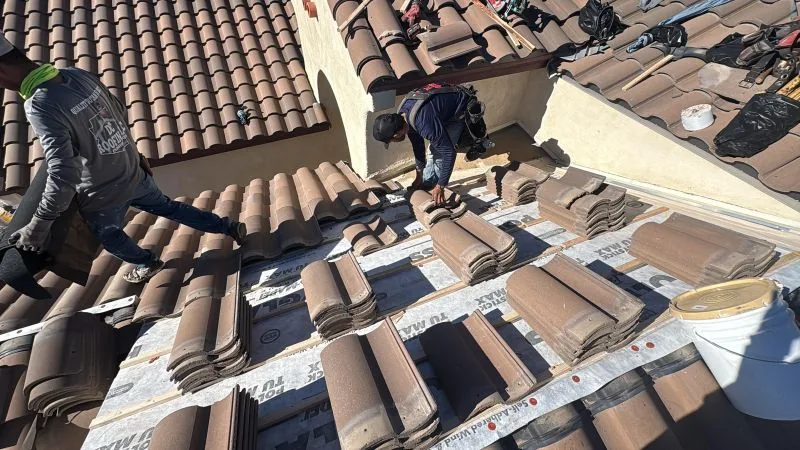
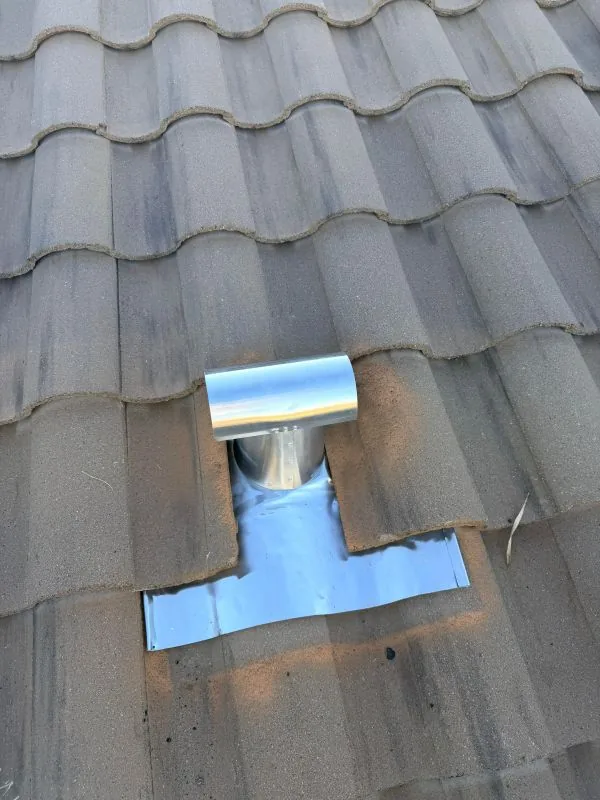
Tile Roof Services Projects Completed in Tucson
How Our Tile Roof Services Process Works
- 1
Full Roof Inspection
David or a crew lead gets on the roof and walks the entire surface - checking for cracked tiles, shifted tiles, deteriorated underlayment, and flashing that's pulled away from penetrations. The evaporative cooler on your roof gets checked every time. There's often more going on than what you spotted from the ground.
- 2
Document and Talk It Through
We take photos of every finding and walk you through them in plain language - what needs fixing and what doesn't. No jargon, no pressure. You get a straight explanation of what your roof actually needs before any work starts.
- 3
Carefully Lift Surrounding Tiles
Tile roofs aren't like shingles - you can't just put something on top. We remove tiles methodically to get to the underlayment or damaged section without cracking good tiles around it. Clay and concrete tile are brittle, so this takes patience and the right technique.
- 4
Replace or Reseal What's Failed
Cracked tiles get swapped for matched material from our inventory. Worn underlayment gets patched or replaced in that section. Flashing gets reset and sealed properly. If the felt paper underneath has dry-rotted from Tucson's UV exposure, we address that too.
- 5
Reset Tiles and Clean the Work Area
Tiles go back in their original pattern. Debris gets cleared off the roof and out of your yard. Homeowners in Sam Hughes and the Catalina Foothills hear the same thing from us every time: we leave the property exactly as we found it, just with a roof that works.
Ready to Get Started?
Fast response. Licensed ROC #328733. 4.9★ across 100+ Google reviews.
Tile Roof Services Services We Provide in Tucson and Southern Arizona
What Tucson Homeowners Gain from Choosing DC Roofing of Arizona
Tile Roof Services in Tucson, Oro Valley, Marana, Sahuarita, Green Valley, and Vail
DC Roofing of Arizona provides tile roof services services throughout Southern Arizona, including:
Frequently Asked Questions About Tile Roof Services in Tucson
How do I know if my tile roof actually needs repair or if it can wait?
If you see cracked tiles, shifted rows, or a water stain on your ceiling, don't wait. Those are signs damage is already happening under the tile. In Tucson, monsoon season turns a small problem into a big one fast. Cracked mortar at ridge lines, dried-out flashing around evaporative cooler penetrations, and brittle underlayment won't fix themselves. A quick inspection tells you exactly where things stand so you're not guessing.
Can I just replace the broken tile and call it done?
Swapping the tile alone often misses the real problem. The tile is just the outer shell. Underneath it, you've got underlayment, mortar bedding, and flashing that all take damage too. In Tucson's heat, underlayment breaks down faster than most climates. We regularly find cracked felt paper or failed foam adhesive right next to the visible damage. Fixing only the tile and leaving the rest means the leak comes back, usually during the next monsoon.
Why does my tile roof keep having problems even though it looks fine from the street?
Tile roofs in Tucson take a beating from thermal cycling. Surface temps can hit 160 degrees, then drop 40 to 50 degrees overnight. That happens hundreds of times a year. It loosens mortar, cracks sealant around penetrations, and stresses the underlayment beneath tiles that look perfectly fine from the ground. The mortar holding your ridge caps is usually the first thing to go. Once water finds that opening, it runs downhill and pools somewhere you'd never expect.
What should I expect when you come out to do the repair?
We lift surrounding tiles carefully, inspect the underlayment and flashing, then fix what's actually failing - not just the obvious spot. Clay and concrete tile are brittle, so this takes patience. We also check the area around the damage because a second issue is often forming nearby. Before we leave, we tell you what we found and what your roof actually needs. We clean up completely too - every broken piece, every scrap.
Do evaporative coolers cause tile roof leaks in Tucson?
Yes - evaporative cooler penetrations are one of the most common leak sources we find on Tucson homes. The flashing around those openings expands and contracts constantly with the heat. Over time, the seal pulls away and water gets in, often long before you notice a stain inside. Homes across the Catalina Foothills and midtown Tucson deal with this regularly. Resealing or replacing that flashing is a straightforward fix when you catch it early.
How soon after a monsoon storm should I get my roof checked?
Get it checked within a few days if you saw tiles shift, heard something move, or noticed a new stain inside. Monsoon wind gusts push tiles out of position and expose whatever the summer heat already weakened. Waiting a few months - like many Tucson homeowners do - turns a cracked tile and loose flashing into soft drywall and damaged decking. The storm usually just reveals damage that was building all season.
How much does tile roof repair cost in Tucson?
Tile roof repair costs vary widely based on what's actually causing the leak. Replacing a handful of cracked tiles runs $300–$700. Flashing repair at a chimney or skylight typically ranges from $400–$1,200. If underlayment failure is involved, a tile-off underlayment restoration on a full roof runs $5,000–$15,000+ depending on roof size and tile condition. We provide free written estimates - call (520) 979-9095.
Can you match my existing tile profile and color?
In most cases, yes. We maintain an extensive inventory of common Tucson-area profiles and work with regional distributors who specialize in discontinued tile matching. Older clay tile roofs from the 1980s can be challenging - if an exact match isn't achievable, we'll discuss options with you, including strategic tile relocation from less visible roof sections to achieve the best visual result where it matters most.