
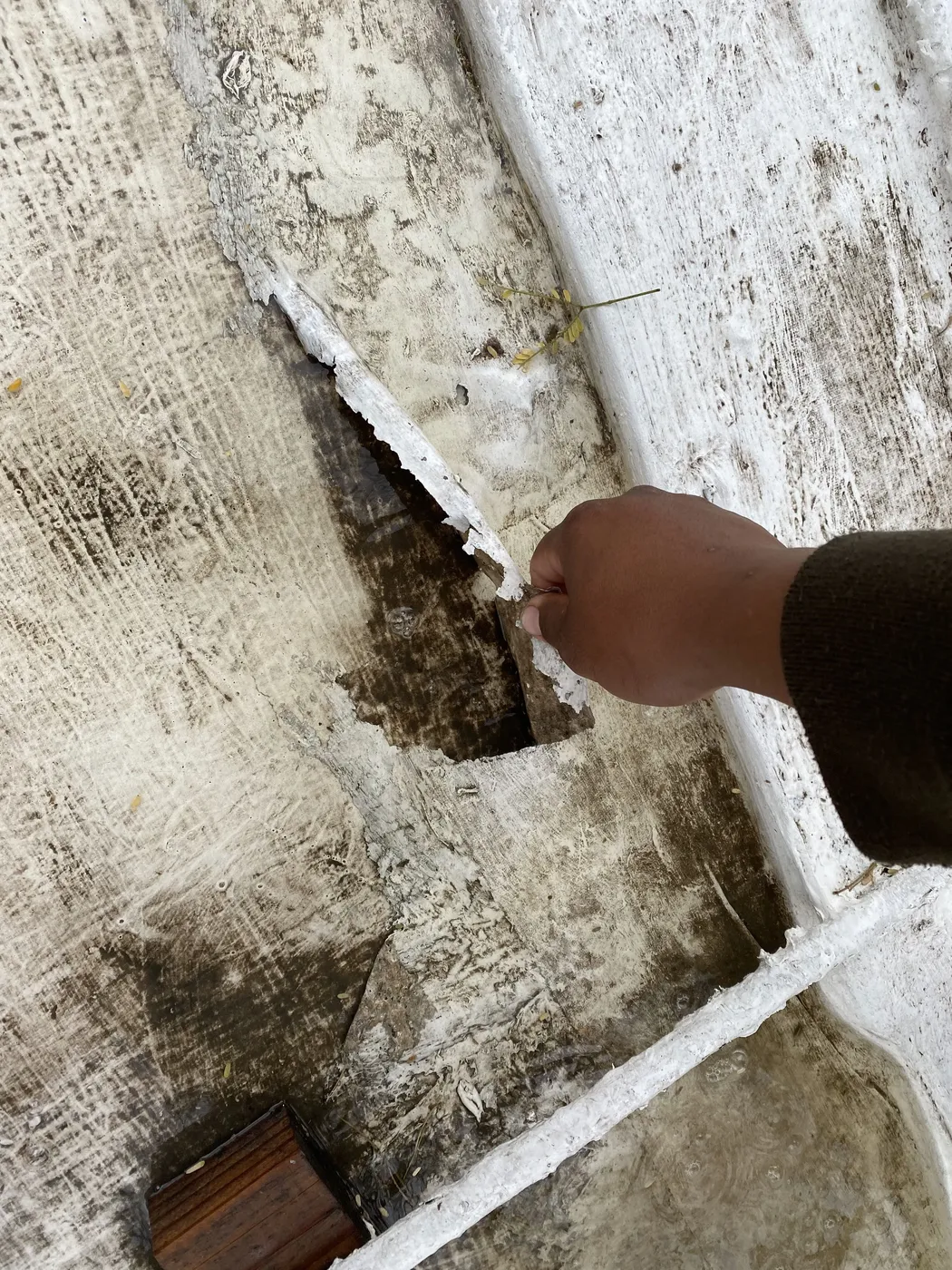
David Contreras, owner of DC Roofing of Arizona, has been roofing in Tucson since 2011, and he's the one who walks the roofs we estimate in Green Valley. Most storm damage on a Green Valley roof isn't visible from the driveway. Wind can shift tile, tear the layer under it, and loosen flashing in ways that only show up once water finds a path inside. This page explains why a look from the ground isn't enough, how storm damage shows up on tile, foam, and gravel roofs, and how to tell whether you should call now or can wait. We're licensed, bonded, and insured (ROC #328733), and we'll tell you plainly when a small repair is all your roof needs.
Why "Looks Fine From the Ground" Doesn't Work in Green Valley
You walk outside the morning after a monsoon storm. There are palo verde branches everywhere and gravel in the pool. You look up at the roof, squint, and everything seems normal, so you go on with your day. That's the mistake.
Tile is the roof we work on most, and tile is very good at hiding trouble. The tile itself is just the armor. The real waterproofing is the underlayment underneath it. Wind can shift a tile slightly, damage the underlayment below, and leave the tile sitting close to where it was, still looking fairly straight from the yard.
Then it may not leak that week. It can leak in August during the next big storm, or months later when a slow drip finally stains a bedroom ceiling. By then, the damage may have been sitting in your decking for a long time. Here's what goes wrong in a storm that you often can't see from below:
- Cracked or slipped tile that's still sitting in place, with damaged underlayment underneath
- Lifted or bent flashing at walls, chimneys, and skylights, where wind gets underneath and works it loose
- Damaged evaporative cooler penetrations, one of the most common leak sources on Tucson-area roofs
- Punctures from blown debris, especially on flat and low-slope sections where branches land and stay
- Ponding or blocked drainage on flat roofs after debris clogs a scupper or drain
Notice what those have in common. Every one of them happens above your sightline, under something, or on a section of roof you can't see from the yard.
So what does a real check look like? It has to happen on the roof. We walk the surface and check the tile for cracks, chips, and movement. We lift tile that shifted or took an impact to look at the underlayment beneath it. We check every flashing point, including wall junctions, chimneys, skylights, and cooler curbs, and we clear and inspect drains, scuppers, and valleys. We also look at the attic for daylight, damp decking, or fresh staining.
Please leave the roof and the attic to us. Tile cracks under foot weight, and an attic on a Green Valley summer afternoon can be dangerously hot. What you can do safely is walk your yard, look up at the roof line, and check your ceilings. And after a storm with strong wind and debris, a proper look is worth it, ideally before the next one arrives. According to the National Weather Service, thunderstorm straight-line winds can lift huge clouds of dust, and NWS Tucson considers thunderstorm winds of 60 mph or more damaging.
How Storm Damage Shows Up on Tile, Foam, and Gravel Roofs
Not every roof breaks the same way. A tile roof, a foam roof, and an old gravel built-up roof all react differently to wind and driving rain, and knowing what to look for on yours saves a lot of guessing.
Tile roofs. Clay and concrete tile hold up well to sun, but wind can lift them. A gust catches the edge of a tile and slides it, and now there's a gap. Because the underlayment does the real waterproofing, a cracked or shifted tile isn't just cosmetic. It exposes that layer to UV and rain. Minor entry points become major leaks over several storms, so a few slipped tiles ignored for a season or two can turn into a ceiling stain. The tile was the warning. The stain was the bill.
Foam roofs. Storm damage on foam often starts as small punctures from flying debris, like a palo verde branch, gravel off a neighboring roof, or a loose piece of trim. The coating on top gets nicked, and water can work its way into the foam beneath it. Water rarely shows up inside right where it got in, so a leak in the house can appear well away from the puncture.
Gravel and built-up roofs. These are still out there on older flat sections and carports. Wind can scour the gravel off in patches, leaving the asphalt layer bare and exposed to the sun.
Here's what to look for from the ground after a storm, no ladder needed:
- Tile pieces in your yard, driveway, or gutters
- Tiles that look crooked, slipped down, or sitting higher than the ones around them
- Dark or discolored patches on a foam roof where water is sitting
- Bare spots on a gravel roof where the rock has blown clear
- Debris piled against parapet walls, scuppers, or drains
- Bent or lifted metal flashing around vents, skylights, and evaporative coolers
- New water stains on ceilings or at the tops of interior walls
Evaporative cooler penetrations deserve a special look. The cooler sits on a curb, flashing seals around it, and years of sun and wind can work that seal loose. One hard storm can finish the job. On a flat roof, watch for water that hangs around: NRCA says ponding that lasts more than 48 hours after rain can be detrimental to a membrane roof assembly.
Ground-level signs tell you something's wrong. They rarely tell you where. That's what a real inspection is for, and it's why we get on the roof instead of guessing from photos.
Should You Act Now or Wait? A Quick Scenario Check
Not every bit of storm damage is an emergency, but some of it is. Here's the order we'd walk you through over the phone after a monsoon cell crosses the area. Work down the list and stop at the first one that matches:
- Water is coming inside right now. That's urgent. Get a bucket under it, move what you can out of the way, and call. If water is coming through a light fixture or ceiling fan, shut off the breaker for that circuit, because water and wiring are an electrical hazard.
- You can see broken or missing tile, or underlayment or decking showing. That's urgent within a day or two, especially if more rain is forecast.
- There's a visible sag, a soft spot in a ceiling, or a stain that's grown since yesterday. That's urgent too, and it's a structural question now. Keep people and belongings out from under it.
- One or two tiles shifted but still seated, or debris landed on the roof, and nothing has changed inside. Schedule an inspection this week, and don't climb up yourself.
- Granules in the gutters or a few lifted shingle edges, with no leaks. Schedule an inspection within a few weeks, and document what you see.
Waiting has a real cost here, it's just delayed. A small underlayment problem in June can turn into wet, damaged decking by September, because daily heat and overnight cooling keep working the gap open. That's why it pays to get a look at the roof before the next storm rather than after it.
Can you overreact? Sure. Some people are ready to replace an entire roof over one cracked tile, and that's not how we operate. Plenty of storm damage is a genuine repair, and we'll tell you that straight. If you're on the fence, the inspection settles it, with no obligation and no pressure to do anything with what we find.
What We Do After a Storm
The first step is a free inspection. David goes up on the roof and checks the tile, flashing, pipe boots, cooler seals, and underlayment, taking photos as he goes. Then he explains what he found in plain terms and what your roof needs, nothing more. A storm-hit roof doesn't always need a tear-off. It's often a handful of tiles and some flashing. Our repairs carry a 2-year labor warranty.
For an active leak, call us right away. We give priority to urgent calls, and our emergency roofing service covers temporary protection, but we don't run overnight dispatch. If you're filing an insurance claim, we can provide a written inspection report with photos for your adjuster. What your policy covers is a question for your insurer.
If your Green Valley home sits empty for part of the summer, ask someone you trust to check the ceilings and floors inside after monsoon storms, and call us if anything looks wrong. A small leak in an empty house can run for weeks before anyone notices.
After a big storm, crews from out of town often knock on doors offering free inspections. Before anyone goes up on your roof, look up their Arizona ROC license at roc.az.gov (ours is ROC #328733). For a fuller checklist, read our guide to spotting roof damage after a monsoon, and see our storm damage roof repair page for the service itself.
FAQ: Storm Damage Roof Repair in Green Valley
How do I know if my roof needs a professional look after a monsoon?
You need a professional look if your roof went through strong wind or heavy debris, even if it looks fine from the ground. Tile can shift and settle back down while the underlayment beneath it stays damaged, and you won't see that from your yard. Flashing points near coolers, chimneys, and skylights also need eyes on them after a real storm. If you're unsure, a proper check can catch problems before they turn into ceiling stains.
Can I just check my own roof after a storm instead of hiring someone?
You can check for obvious signs like tile in the yard or stains on your ceilings, but a ground check alone won't tell you enough. Most storm damage hides under tile, behind flashing, or inside the attic. Leave the roof and the attic to a professional, since tile cracks under foot weight and an attic can be dangerously hot on a summer afternoon. If you see any warning signs, get someone on the roof itself rather than guessing from the driveway.
What's the biggest misconception about storm damage on tile roofs?
That a tile roof looking straight and undamaged means it's fine. Tile is armor, not waterproofing. Wind can shift a tile and damage the underlayment beneath it, and the tile can end up looking normal from below. It may not leak for months, and by the time a stain shows up, the underlayment has often been exposed since the last big storm.
Why do evaporative coolers cause so many roof leaks?
Evaporative coolers sit on a roof curb sealed with flashing, and that seal can loosen over years of sun and wind. One hard storm can open it up. Cooler penetrations are one of the most common leak sources on Tucson-area roofs, and a leak can show up inside the house well away from the curb, which is why they deserve a close check after every major storm.
Do foam roofs and tile roofs show storm damage the same way?
No. Tile can hide damaged underlayment beneath a surface that still looks straight. Foam roofs tend to get small punctures from flying debris, and water can get into the foam and show up as a leak well away from the puncture. Knowing your roof type helps you know which warning signs matter for your home.
My Green Valley home is empty part of the summer. What should I do about monsoon storms?
Ask someone you trust to check the ceilings and floors inside after monsoon storms, and to call you or us if they see a stain, a drip, or a musty smell. A small leak in an empty house can run for weeks before anyone notices. If a storm was a strong one, have the roof looked at even if nothing shows inside yet.
Do I need a permit for storm damage roof repair in Green Valley?
Green Valley is in unincorporated Pima County, so permits go through Pima County. Pima County's permit guidance lists re-roofing with like materials, such as tile or shingles, as not requiring a permit, while structural roof work does. Requirements can change, so if your repair involves anything structural, check with Pima County Development Services before work starts, and check with your HOA if you have one.
Is DC Roofing of Arizona insured to work in Green Valley?
Yes. We're licensed (ROC #328733), bonded, and insured in Arizona, and we carry liability insurance and workers' compensation coverage on every job.