
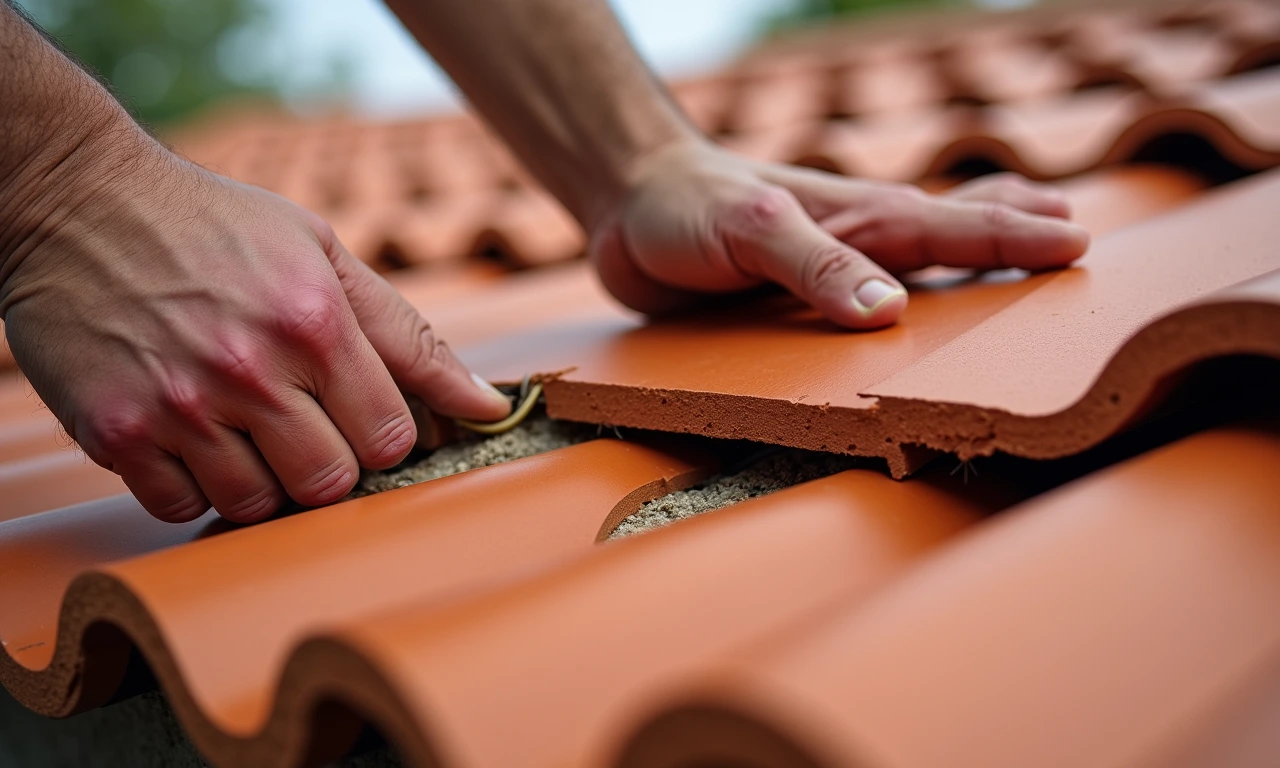
Trusted Tile Roof Repair Services for Tucson & Southern Arizona Homeowners
Clay Tile vs. Concrete Tile in Tucson — What You Have Matters
The two dominant tile materials in Southern Arizona are clay and concrete, and they behave differently when it comes to repair. Clay tile is the premium product — lighter, more UV-resistant, and longer-lasting than concrete — but it's also more brittle and harder to match exactly when broken tiles need replacing. Clay tile roofs installed 20–30 years ago may use profiles and colors that are no longer in production, making matching a genuine challenge. We maintain an extensive inventory of clay tile to source matches for older homes.
Concrete tile is more commonly installed on homes built in the 1990s through today. It's heavier, more durable under foot traffic (an important consideration for maintenance and HVAC access), and generally easier to match from current production runs. Both materials, when properly maintained, can last 50 years or more — but neither performs well when the underlayment beneath them deteriorates.
The Real Culprit Behind Most Tile Roof Leaks: Underlayment
This is the most important thing most Tucson homeowners don't know about their tile roof: the tile itself is not what keeps water out. The tile is a protective layer that sheds bulk rainfall, but the actual waterproofing is the underlayment — the layer of felt or synthetic membrane installed directly on the deck beneath the tile. Tile roofs installed in the 1980s and 1990s typically used 30-lb felt underlayment with a 15–20 year service life. Many of those roofs have tile that still looks fine while the underlayment beneath it has completely failed.
If you have a tile roof that's 20+ years old and you're experiencing leaks that appear unrelated to obvious tile damage, underlayment failure is the most likely cause. A proper roof inspection can confirm this. The repair involves a tile-off, new underlayment installation, and tile replacement — essentially a re-roofing project that preserves your existing tile where possible. This is more cost-effective than full replacement if the tile itself is in good condition.
Flashing Failures on Tile Roofs
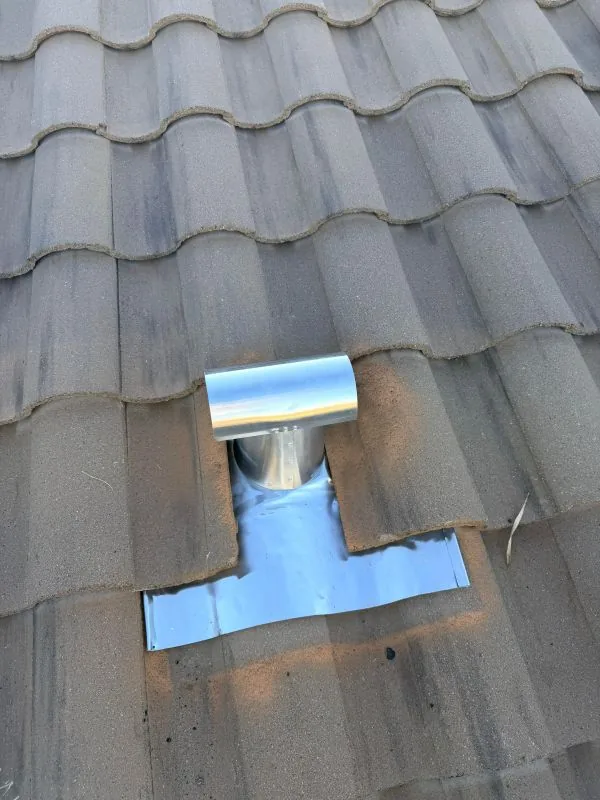
After underlayment, the second most common source of tile roof leaks in Tucson is failed flashing — the metal components that seal the junction between the tile field and chimneys, skylights, HVAC penetrations, and walls. Flashing is typically made of galvanized steel or lead, both of which degrade over time in Southern Arizona's UV environment. Mortar-set flashing (common on older tile roofs) cracks and separates as it ages. DC Roofing of Arizona's tile repair technicians are experienced with all flashing types and carry appropriate materials for matching existing systems.
Matching Tile — Why It Matters and How We Do It
Visually mismatched tile repairs stand out and affect curb appeal and property value. We maintain an extensive inventory of common Tucson-area tile profiles and colors and work with regional distributors who specialize in discontinued tile matching. When an exact match isn't available, we discuss options with the homeowner — sometimes tiles from a less visible roof section can be moved to a prominent area with new tile used at the rear, achieving a better visual match where it counts most.
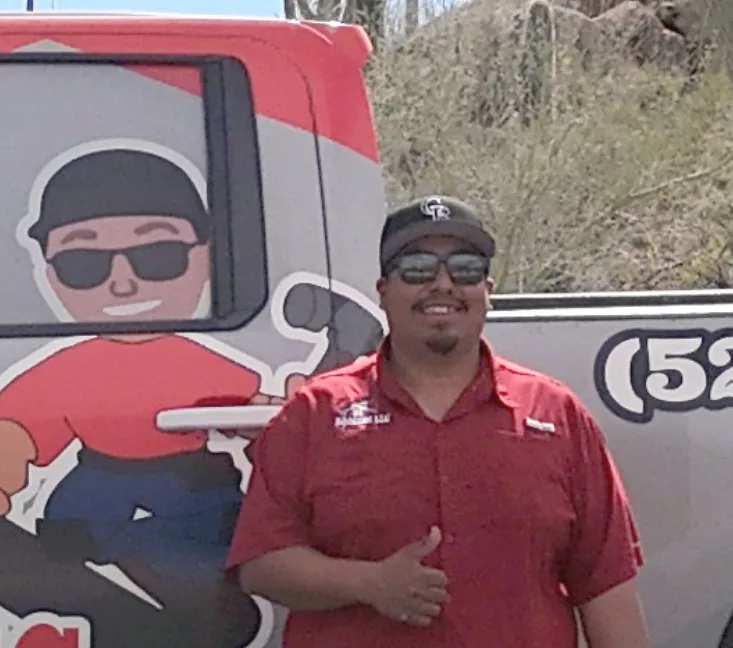
David Contreras, Owner & Founder — DC Roofing of Arizona · Licensed ROC #328733 · Tucson native since 1989
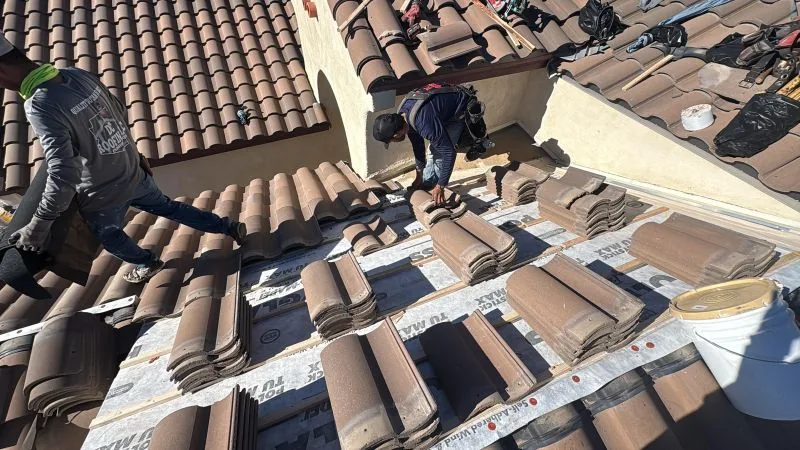
How Our Tile Roof Repair Process Works
- 1
Tile Roof Inspection
We inspect the full tile field, all flashing points, ridges, hips, and valleys. Where tiles are lifted or removed for inspection, we look at underlayment condition — the key factor in tile roof longevity.
- 2
Underlayment Assessment
If underlayment failure is suspected, we access a section to visually confirm condition. This determines whether targeted tile repair or a tile-off underlayment restoration is the right scope.
- 3
Tile Sourcing & Matching
We identify the tile profile and color and source matching material from our inventory or regional distributors before scheduling the repair work.
- 4
Repair Execution
Damaged tiles are removed, underlayment and flashing are repaired or replaced as needed, and new matching tile is installed. Ridge mortar and hip caps are reset and sealed.
- 5
Inspection & Cleanup
All repair areas are inspected before we leave. Broken tile debris and all packaging material are removed from the site.
Ready to get started? Our Tucson crew is available for free estimates — no obligation, no pressure.
Tile Roof Repair Services We Provide in Tucson and Southern Arizona
- Concrete tile repair and replacement
- Clay tile repair and replacement
- Underlayment inspection and repair
- Tile mortar restoration
- Flashing repair at penetrations
- Ridge cap repair
- Matching tile color and profile
- Valley and hip repair
What Tucson Homeowners Gain from Choosing DC Roofing of Arizona
- Preserve your tile roof's appearance
- Fix the real source of leaks
- Matched tile from extensive inventory
- Extend tile roof life by decades
Tile Roof Repair in Tucson, Oro Valley, Marana, Sahuarita, Green Valley, and Vail
DC Roofing of Arizona provides tile roof repair services throughout Southern Arizona, including:
Frequently Asked Questions About Tile Roof Repair in Tucson
How much does tile roof repair cost in Tucson?
Tile roof repair costs in Tucson vary widely based on what's actually causing the leak. Replacing a handful of cracked tiles runs $300–$700. Flashing repair at a chimney or skylight typically ranges from $400–$1,200. If underlayment failure is involved, a tile-off underlayment restoration on a full roof runs $5,000–$15,000+ depending on roof size and tile condition. We provide free written estimates — call (520) 979-9095.
My tile roof is 25 years old and leaking. Does it need to be replaced?
Not necessarily. The tile on a 25-year-old roof is often still in serviceable condition — it's the underlayment beneath the tile that's typically at the end of its life on roofs of that age. A tile-off underlayment restoration (removing the tile, installing new underlayment, and reinstalling the existing tile) can give that roof another 20–30 years of life at significantly less cost than a full tile replacement. We'll inspect the tile and underlayment and tell you honestly which option makes more sense.
Can you match my existing tile profile and color?
In most cases, yes. We maintain an extensive inventory of common Tucson-area profiles and work with regional distributors who specialize in discontinued tile matching. Older clay tile roofs from the 1980s can be challenging — if an exact match isn't achievable, we'll discuss options with you, including strategic tile relocation from less visible roof sections to achieve the best visual result where it matters most.
Why is my tile roof leaking if the tiles look fine?
This is very common with tile roofs over 15–20 years old. The tile surface looks intact, but the underlayment — the actual waterproofing layer beneath the tile — has reached the end of its service life and is no longer preventing water infiltration. Felt underlayment commonly used on roofs installed before 2000 typically lasts 15–20 years. When it fails, the roof leaks even though the tile above it looks perfect. A proper inspection can confirm this.
Is it safe to walk on my tile roof?
Only for experienced professionals using proper technique. Tile is fragile under improper foot placement — walking on the leading edge of tiles rather than the overlapping area cracks them. Our technicians are trained in proper tile roof access protocols. We strongly advise homeowners not to access their own tile roofs, both for safety and to avoid creating new damage that compounds the original problem.