
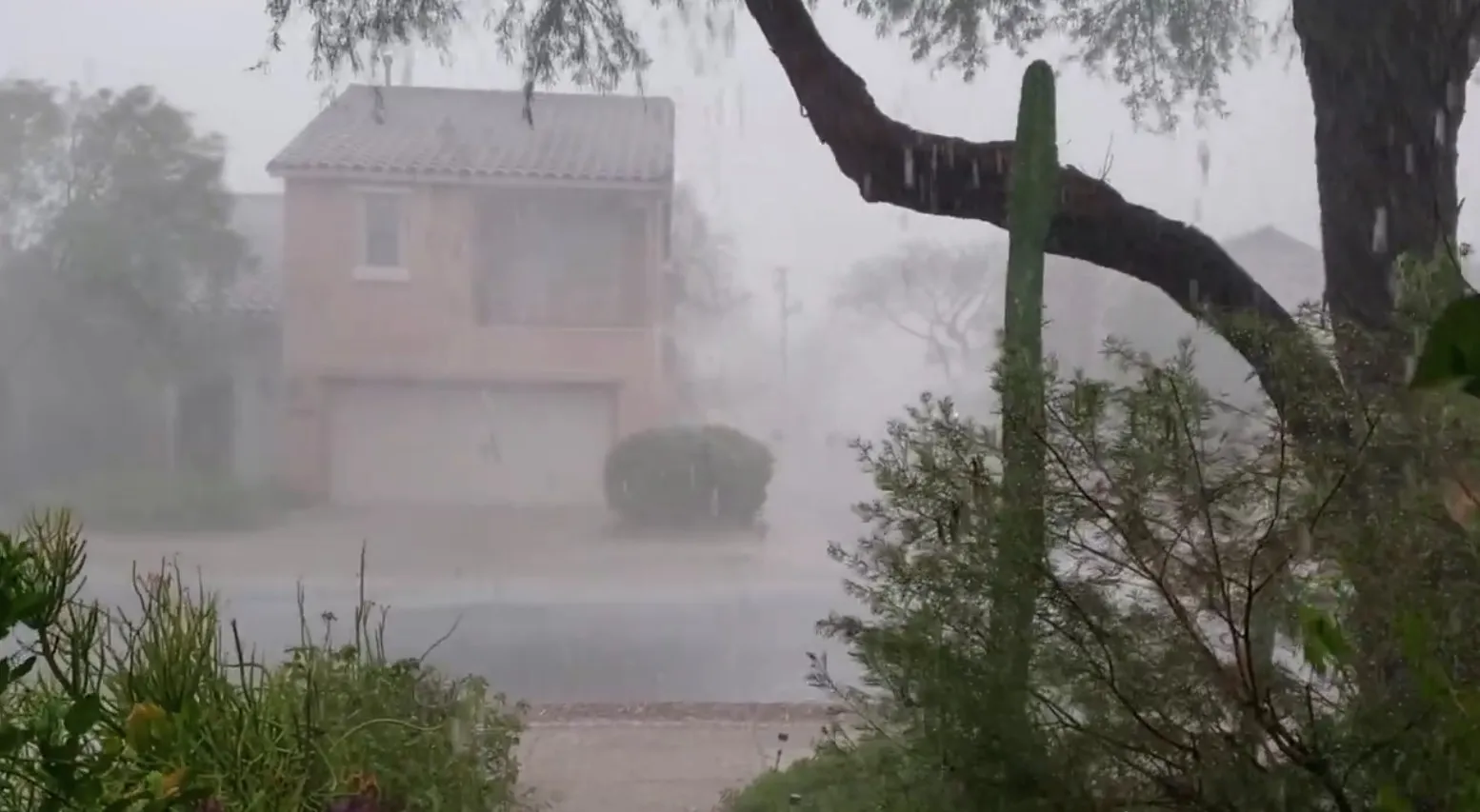
Two houses on the same street in Tucson can get completely different repair quotes for the same drip on the ceiling. That’s not a contractor problem - it’s just how roof repairs work. What’s visible inside tells you almost nothing about what’s actually happening up top.
Why Leaky Roof Repair Costs Vary So Much in Tucson
Two houses on the same street can have completely different leaky roof repair cost numbers. We see it all the time. One homeowner needs a cracked tile replaced and some fresh sealant around a vent pipe. The neighbor across the road has water running down the inside of their wall because the underlayment failed under years of UV exposure. Same symptom. Different job.
That’s the honest answer for why costs swing so wide. It’s not about markup or guesswork. It’s about what’s actually happening underneath.
Here are the biggest factors that move the number up or down:
- Leak source and access. A leak at a roof-to-wall flashing is usually straightforward. A leak that’s traveled ten feet along a rafter before dripping onto your ceiling takes longer to trace and longer to fix.
- Roof type. Clay and concrete tile roofs are everywhere in Tucson, and they require careful handling. Tiles crack if you walk on them wrong. Flat roofs over near the Barrio Viejo area or older midtown homes have their own set of issues with ponding water and deteriorated coatings.
- Extent of damage below the surface. Sometimes we pull a tile and the deck looks fine. Other times the plywood is soft and dark and needs to be cut out. You can’t know until someone gets up there and looks.
- Penetrations. Evaporative cooler mounts, plumbing vents, satellite dish brackets. Every hole in your roof is a potential failure point, and Tucson homes tend to have more cooler penetrations than homes in other parts of the country.
Monsoon season makes all of this worse. According to the National Weather Service, Tucson averages around six inches of rain between June and September, often in intense bursts. That kind of driving rain finds every weak spot fast.
So when someone asks us for a number over the phone, we’re straight with them. We can give a general range, but the real answer comes after a roof inspection. David comes out, gets on the roof, and tells you exactly what’s going on. No surprises later. That’s how we’ve handled over 800 roofs, and it’s the only way to give you a number that means something.
How Roof Type Changes the Repair Scope
The roof on your home decides almost everything about how a repair gets done. Materials, labor, access, even the time it takes. Two houses on the same street in the Sam Hughes neighborhood can have completely different repair needs just because one has clay tile and the other has a flat modified bitumen roof.
We see this play out every week in Tucson. Here’s how the most common roof types change what’s involved:
- Clay and concrete tile: These are everywhere in Tucson. Tiles themselves rarely fail. But the underlayment beneath them breaks down from UV and heat over the years. Fixing a leak usually means carefully lifting surrounding tiles, replacing the damaged underlayment section, then resetting everything. Tiles crack if you’re not careful walking on them, so the repair scope can grow fast with an inexperienced crew.
- Flat and low-slope roofs: Common on older homes near downtown and on commercial buildings. Water pools instead of running off. Leaks tend to spread wider before you notice them. Repairs often involve cutting out saturated sections and patching with new membrane or coating.
- Shingle roofs: Less common here than in other parts of the country, but we still work on plenty. Tucson’s intense sun dries shingles out faster than most climates. Repairs are usually straightforward - pulling damaged shingles and replacing them. But if the damage sits near a valley or ridge line, the scope jumps up.
And then there’s the stuff mounted on your roof. Evaporative coolers are a big one. The penetrations where cooler lines and supports go through the roof surface are some of the most common leak sources we find. That’s a Tucson-specific problem you won’t read about in generic roofing guides.
So when you’re trying to figure out your leaky roof repair cost, the roof type is the first question we’ll ask. David looks at the material, the slope, the age of the underlayment, and what’s mounted up there before giving you a straight answer on what the repair actually involves. Not a guess. A real inspection from someone who’s done over 800 roofs on Tucson roofs, licensed under ROC #328733.
Monsoon Season Timing and What It Does to Repair Cost
Every year around mid-June, Tucson’s monsoon season rolls in. It doesn’t ease in. It hits. Driving rain, wind gusts, hail in some neighborhoods. And it runs straight through September. That four-month window changes everything about leaky roof repair cost for homeowners across the city.
Here’s what we see play out every year. A homeowner near Sam Hughes or in the Catalina Foothills notices a small ceiling stain in April or May. It’s dry outside, nothing’s leaking right now, so they wait. Then July hits. One hard storm turns that small stain into a soaked ceiling, damaged drywall, maybe ruined insulation. The repair that would’ve been straightforward in May is now a bigger job in August.
Monsoon season affects your repair cost in a few real ways:
- Demand spikes hard. Every roofer in Tucson gets flooded with calls after the first big storm, so wait times go up and scheduling gets tight.
- Water damage spreads fast. A leak that sat dormant during dry months can soak underlayment, rot decking, and ruin interior finishes in one storm cycle.
- Access gets harder. Wet tile roofs are dangerous to walk on. Flat roofs with standing water require extra prep. Crews sometimes can’t safely get up there until conditions clear.
- Secondary damage adds up. Mold growth, stained ceilings, warped framing. None of that was part of the original leak, but it all becomes part of the repair.
The pattern is so consistent we could set a calendar by it. We handle emergency roofing calls all through monsoon season, but the honest truth is most of those jobs would’ve cost less if they’d been caught earlier. A roof inspection in spring gives you time to fix things on your schedule, not the weather’s.
Tucson’s climate is hard on roofs year-round. UV breaks down sealants and coatings through the dry months. Then monsoon rain finds every weak point those months of sun created. It’s a one-two punch that’s unique to the Sonoran Desert, and it’s why timing matters so much here.
So if you’re reading this in March, April, or May, you’re in the best window to get ahead of it. Don’t wait for the first storm to tell you what’s wrong.
What a Proper Roof Leak Inspection Looks Like
Most homeowners call us after they spot a water stain on the ceiling. That stain tells you something’s wrong. But it almost never tells you where the actual leak is.
The entry point on your roof and the wet spot inside your house can be ten feet apart. Water travels along underlayment and runs down rafters. So a real roof inspection in Tucson doesn’t start by staring at the stain. It starts on top of the roof, working backward from every likely failure point.
Here’s what we actually do during a roof leak inspection:
- Walk the entire roof surface looking for cracked tiles, lifted flashing, or deteriorated sealant around penetrations.
- Check every vent pipe, swamp cooler boot, and skylight seal. These are the most common leak sources we find on homes in the Midvale Park area and across Tucson’s older neighborhoods.
- Inspect valleys and transitions where different roof planes meet. Debris buildup traps water in those spots.
- Examine the attic from inside, tracing moisture paths along sheathing and rafters to pinpoint the true entry point.
- Document everything with photos so you can see exactly what we see.
Most of the time, the leak traces back to a failed seal or a cracked tile that’s been letting small amounts of water in for months. You just didn’t notice until the damage spread far enough to show inside.
We don’t guess. David comes out personally for inspections because getting the diagnosis right is the whole ballgame. A wrong diagnosis means you pay to fix something that wasn’t broken and the leak keeps going. That’s not how we operate. DC Roofing is licensed under ROC #328733, and every inspection we do is free with no obligation.
A proper inspection takes about 45 minutes on most homes. It’s not a quick glance from the driveway. And it shouldn’t be.
When Repair Is Enough, and When It Is Not
This is the question we get more than any other. And it’s the right one to ask. Nobody wants to pay for a full roof replacement when a repair would’ve handled it. But nobody wants to keep patching a roof that’s past its useful life either.
Here’s how we think about it. A repair makes sense when the damage is isolated. One area of cracked tiles after a monsoon. A single failed boot around a vent pipe. Flashing that’s pulled away near a wall connection on a home over in the Sam Hughes neighborhood. These are fixable problems with clear boundaries. We see them constantly across Tucson, and a straightforward repair gets the roof back to where it should be.
But there are signs that point toward something bigger. We watch for these during every roof inspection:
- Multiple leaks showing up in different areas of the roof over a short period
- Underlayment that’s brittle or degraded from years of UV exposure
- Sagging or soft spots in the decking when you walk the roof
- Previous repairs stacked on top of each other, none of them holding long
If a homeowner calls about leaky roof repair cost, they’re usually dealing with something a repair can handle. That’s the honest truth. We don’t push replacement when it’s not needed. David looks at every roof himself and tells you what he’d do if it were his own house.
The tricky part is when a roof sits right on the line. Maybe it’s 20 years old with one active leak but the underlayment looks thin everywhere else. A repair stops today’s leak, sure. But you could be back in six months with another one two feet away. In those cases we’ll lay out both options clearly so you can decide what fits your situation.
What we won’t do is make that decision for you based on what makes us more money. We’re licensed under ROC #328733 and we’ve built this business on straight answers. If a repair is enough, we’ll say so. If it’s not, you’ll know exactly why.