
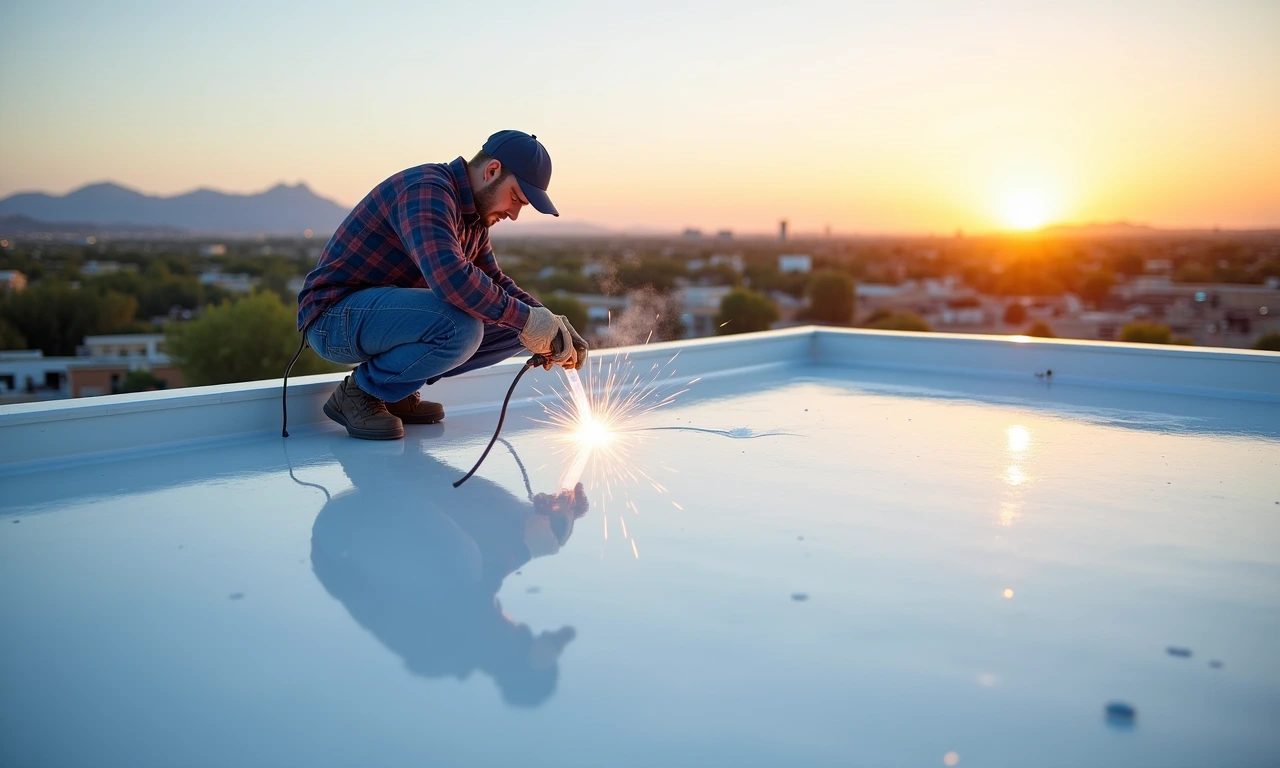
Trusted Flat Roof Repair Services for Tucson & Southern Arizona Homeowners
Why Flat Roofs Fail in Tucson's Climate
Flat and low-slope roofs in Southern Arizona face a specific set of failure mechanisms that differ from pitched roof systems. Intense UV radiation degrades exposed membranes faster than almost anywhere else in the country — a TPO or modified bitumen roof that might last 20+ years in a mild climate may show significant aging at 12–15 years in Tucson without proper maintenance. Temperature extremes cause membranes to expand and contract repeatedly, stressing seams and penetration flashings over time. And monsoon season creates rapid, high-volume rainfall events that test drainage systems and expose any membrane weakness immediately.
The good news: flat roofs are highly repairable when issues are caught early. Most failures begin at seams, around drains, or at flashings — discrete points that can be addressed without replacing the entire membrane. Identifying the actual failure point (not just the wet spot on your ceiling, which can be several feet from the actual breach) is where expertise matters most.
Flat Roof Systems We Repair in Tucson
TPO (Thermoplastic Polyolefin) is the most common modern flat roofing material on commercial buildings in Tucson. TPO seam failures and penetration flashing issues are the most frequent repair scenarios. We carry appropriate materials and heat-welding equipment for proper TPO repairs — not patch-and-hope solutions.
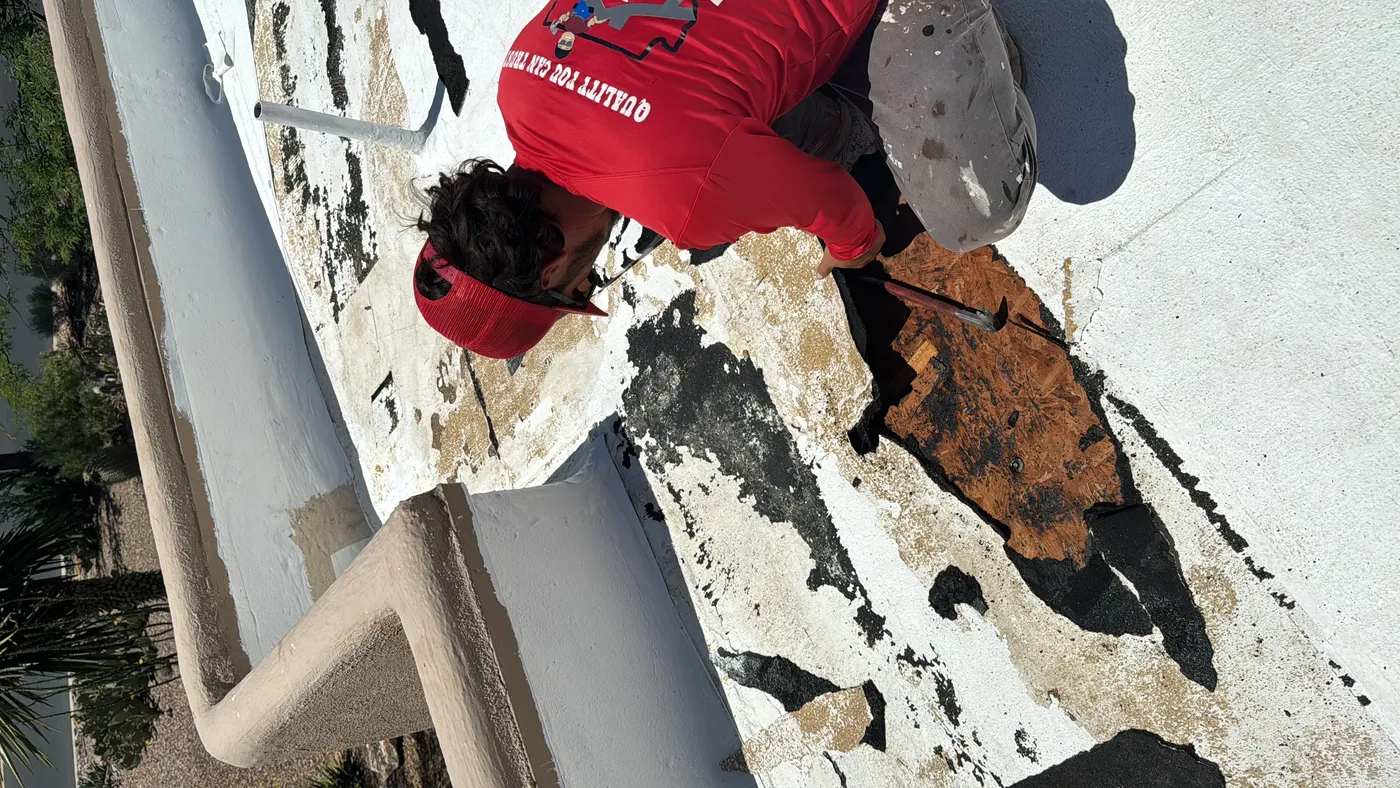
Modified bitumen is common on both commercial and residential flat roofs, particularly those installed from the 1980s through the 2000s. Modified bitumen can blister, crack, or delaminate from the substrate. Seam repairs, blister repairs, and termination bar re-attachment are standard work for our flat roof team.
Foam roofing (SPF) is prevalent on residential flat roofs in Tucson — it's a popular choice for desert homes due to its insulating properties. Foam roofs require periodic recoating to protect the underlying foam from UV degradation. When a foam roof develops cracks or divots, repairs involve cleaning, foam injection, and recoating. If the foam coating is depleted across the whole surface, a full recoating is the appropriate response.
Built-up roofing (BUR) — multiple layers of bitumen and reinforcing fabric — is found on older Tucson commercial buildings. BUR repairs typically involve patching failed sections with compatible materials and addressing any drainage issues contributing to premature wear.
Drainage Problems: The Root Cause You Can't Ignore
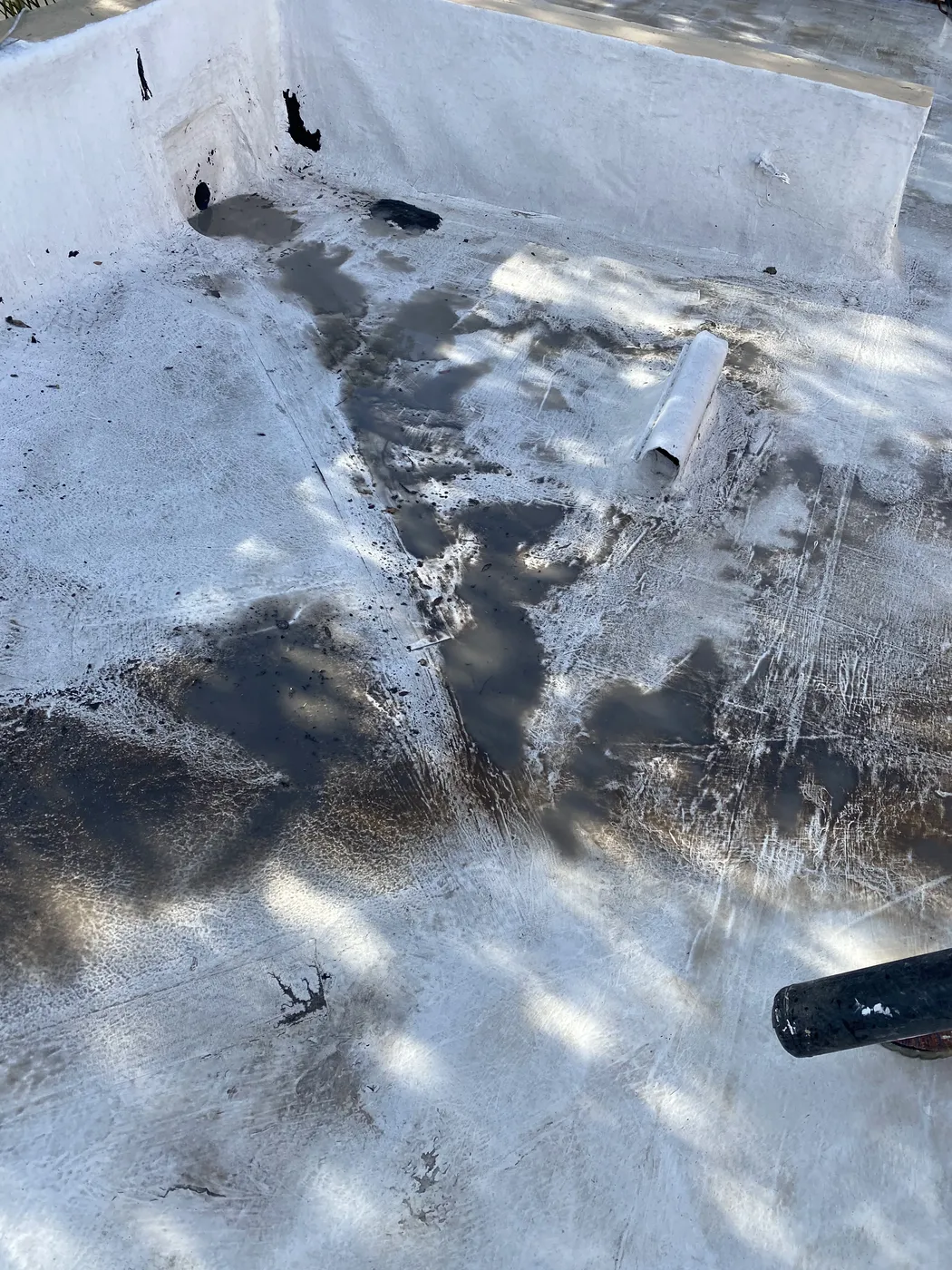
Ponding water — water that remains on a flat roof 48+ hours after a rain event — is one of the most destructive forces acting on any flat roof membrane. It adds structural load, accelerates membrane degradation, and creates a constant pressure against any seam or penetration. If your flat roof has areas of persistent ponding, the underlying drainage problem must be addressed alongside any membrane repairs — otherwise the same area will fail again.
We assess drainage slope and drain flow as part of every flat roof evaluation. Solutions range from drain clearing and repositioning to adding supplemental drains or tapered insulation to improve slope in problematic areas. A regular maintenance program that includes drain clearing before monsoon season significantly reduces ponding-related damage.

David Contreras, Owner & Founder — DC Roofing of Arizona · Licensed ROC #328733 · Tucson native since 1989
How Our Flat Roof Repair Process Works
- 1
Flat Roof Inspection & Leak Tracing
We inspect the full membrane surface, all seams, drains, and penetration flashings. On active leaks, we trace the water path to identify the actual breach point — which is often not directly above the interior wet spot.
- 2
Drainage Assessment
We assess all drain points for flow and identify any areas of persistent ponding. Drainage issues are documented and addressed as part of the repair scope when present.
- 3
Written Estimate by Repair Type
We provide a written estimate itemizing membrane repairs, flashing repairs, and drainage work separately so you understand what each component costs.
- 4
Membrane & Flashing Repair
Repairs are made using materials compatible with the existing system — we don't apply incompatible patch materials that create new failure points at the repair edge.
- 5
Post-Repair Inspection
All repaired areas are inspected before we leave. For significant repairs, we follow up after the next rain event to confirm the repair is holding.
Ready to get started? Our Tucson crew is available for free estimates — no obligation, no pressure.
Flat Roof Repair Services We Provide in Tucson and Southern Arizona
- TPO membrane repair
- Modified bitumen repair
- Built-up roofing (BUR) repair
- Foam roofing repair and recoating
- Drain clearing and repair
- Ponding water solutions
- Seam and blister repair
- Full membrane replacement
What Tucson Homeowners Gain from Choosing DC Roofing of Arizona
- Stop flat roof leaks for good
- Prevent structural damage from standing water
- Expert in all flat roof system types
- Commercial-grade repairs at any scale
Flat Roof Repair in Tucson, Oro Valley, Marana, Sahuarita, Green Valley, and Vail
DC Roofing of Arizona provides flat roof repair services throughout Southern Arizona, including:
Frequently Asked Questions About Flat Roof Repair in Tucson
How much does flat roof repair cost in Tucson?
Flat roof repair costs in Tucson depend heavily on the type of system and extent of damage. Minor seam repairs or drain clearing typically run $300–$800. Larger membrane repairs involving multiple failure points, penetration flashing replacement, or drainage corrections can run $1,500–$5,000. Full membrane replacement is a separate scope. DC Roofing of Arizona provides free written estimates — call (520) 979-9095.
How do I know if my flat roof needs repair or full replacement?
The key factors: how widespread is the damage, how old is the membrane, and is the existing membrane adequately bonded to the substrate? If failure points are isolated and the membrane is generally in good condition, repair makes sense. If the membrane is approaching end-of-life (15–20 years for TPO and modified bitumen, 10–15 years for uncoated foam), widespread failure points, or significant delamination, replacement or a full recoating restoration is more cost-effective long-term. We'll give you an honest assessment of both options.
Why does my flat roof keep leaking after repairs?
Persistent leaks after repair usually mean one of three things: the original repair didn't address the actual failure point (water was entering elsewhere and traveling to where it appeared), incompatible patch materials were used that failed at their edges, or drainage issues are causing water to pond and force its way through previously sealed areas. We're experienced diagnosing multi-failure flat roofs and will trace the water path carefully before recommending repairs.
Is ponding water on my flat roof a problem?
Yes — ponding water (water that remains 48+ hours after rain) is actively damaging your roof. It adds structural load, accelerates membrane degradation, and eventually forces its way through any seam or penetration. Most flat roofs are designed to drain within a few hours. If you're seeing persistent ponding, you likely have either blocked drains or insufficient roof slope in that area. Both are addressable, and both need to be addressed — repairing the membrane without fixing the drainage just creates repeat failures.
Do you repair foam roofs on residential homes in Tucson?
Yes — spray polyurethane foam (SPF) roofing is common on Tucson-area homes and we repair and recoat foam roofing systems regularly. Foam roof repairs typically involve cleaning the damaged area, filling cracks or divots with compatible foam, and applying a protective elastomeric or silicone topcoat. If the existing coating is depleted across the whole surface, a full recoating is the appropriate treatment. We assess the foam's condition and recommend the right scope.