
Expert Skylight Installation for Tucson & Southern Arizona
David Contreras, owner of DC Roofing of Arizona, has installed skylights on Tucson roofs since 2011. DC Roofing of Arizona (ROC #328733) has completed over 800 roofs across Southern Arizona, and skylight installation looks different depending on what's under it - clay tile, concrete tile, shingle, or flat. Getting the roof cut right matters more than the skylight itself.
Watch: DC Roofing of Arizona in Action
Matching Skylight Installation to Tucson's Roof Types
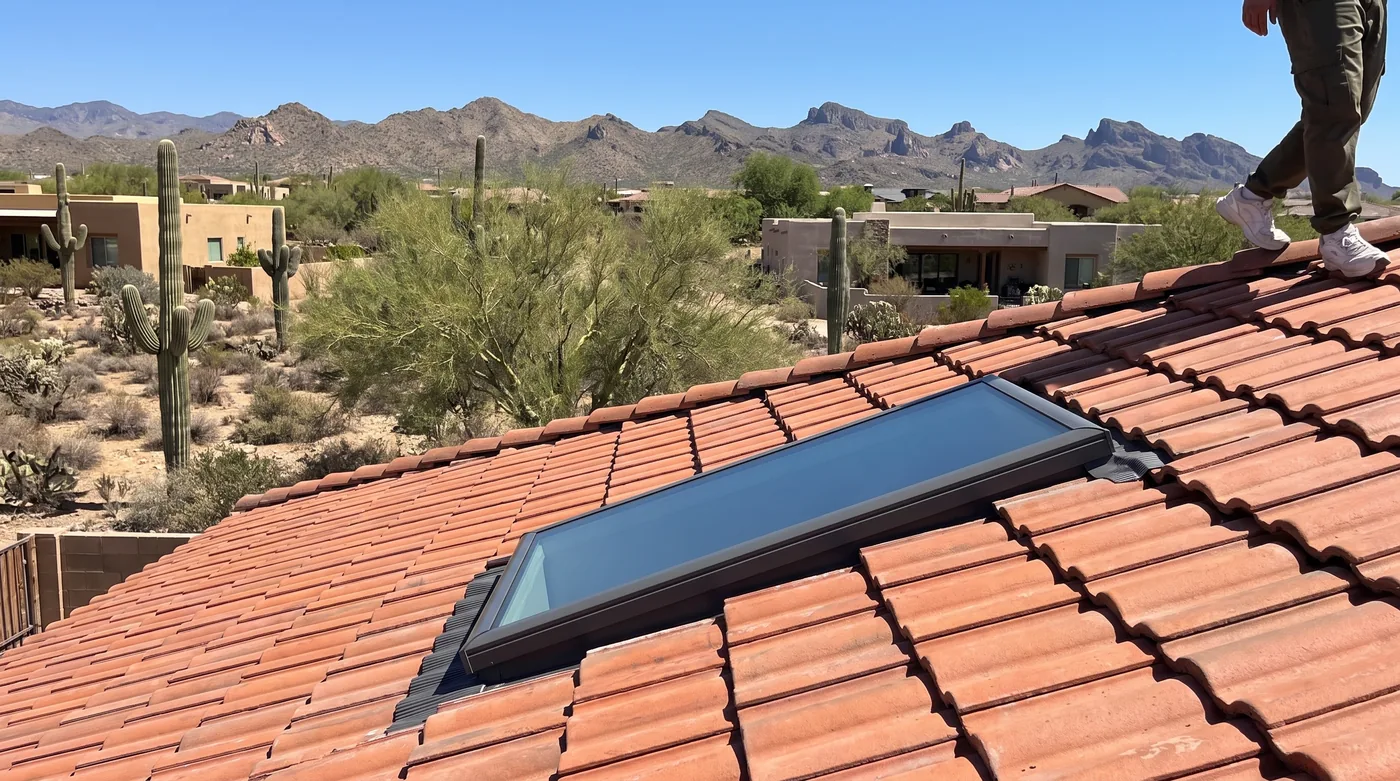
Most homes we work on in Tucson have clay or concrete tile roofs, built here for decades because tile handles desert heat well. But tile roofs are tricky for skylights. You can't just cut a hole and set a unit in place - the flashing must tuck under the tile courses above the opening and lap over the tile below. Get that sequence wrong, and water finds its way in during the first real monsoon storm.
Flat and low-slope roofs are common too, especially on older Tucson homes and commercial buildings. Those need a curb-mounted skylight raised off the roof deck, with the edges sealed into the membrane. Without a slope to shed water, the seal has to be right the first time. Asphalt shingle roofs use step flashing tied into the shingle courses - simpler than tile, but still sequenced correctly, one course at a time. And on roofs with a foam or coating system, the curb has to bond into the existing coating, not just sit on top of it.
We've walked roofs where a previous skylight was caulked in without real flashing work underneath. That's where the leak starts every time. Before we talk about the skylight itself, we look at what's under it.
Solar Tubes vs. Full Skylight Cuts: Choosing the Right Fit
Not every room needs a full skylight. A solar tube is small and round, reflecting daylight through a flexible or rigid tube with a much smaller roof penetration. A full skylight is a window in your roof, framed and flashed like any other opening. Which one makes sense depends on the room.
Small rooms like closets, hallways, and bathrooms usually only need a solar tube for daylight. Kitchens and living rooms with vaulted ceilings often call for a full skylight - the room is bigger, and people want a view of the sky, not just light. Solar tubes also make sense on roofs where a bigger structural opening isn't practical. On many Tucson clay and concrete tile roofs, a full skylight cut means more tile work around the opening and more flashing detail. That's not a reason to skip it - it just changes what the job involves. A solar tube skips most of that.
We've walked plenty of attics where a homeowner wanted a big skylight, but the room only needed a little more light. Once we talk through what the space actually needs, most choose the smaller option.
When a New Skylight Isn't the Right Move
If your roof is pushing 15 to 20 years old, don't cut in a new skylight yet. Start with a roof inspection to check the deck and underlayment condition first - cutting into a roof near the end of its life doesn't make sense on its own. Sometimes a new skylight fits into a larger plan, like a full roof replacement, and sometimes it's better to wait.
It's also worth asking whether you need a new skylight at all. If you already have one and it's leaking, that's often dried-out flashing on an older tile roof, not a failed unit - a repair costs a lot less than a new cut. We cover that side of things in more detail on our skylight repair page. And sometimes the leak isn't the skylight at all - on many Tucson homes, water enters through a nearby evaporative cooler penetration and shows up near the skylight because that's the low point in the attic. Chasing the skylight wastes money when that's the actual problem.
What Happens During a Skylight Installation
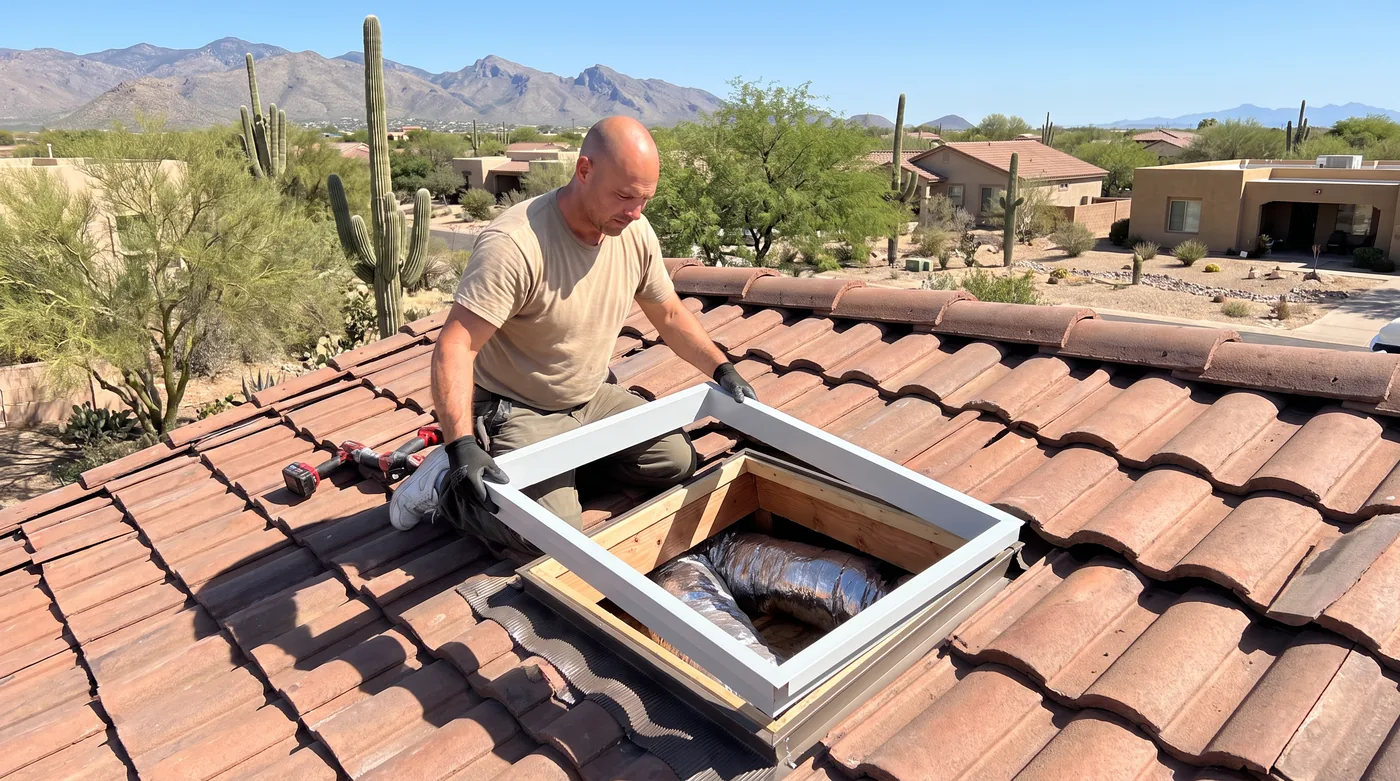
Most Tucson roofs we work on are clay or concrete tile. A skylight job usually starts with tile removal, not cutting a hole and dropping in a unit - that's a different process from a shingle roof, and it takes more care. We stack the tile aside, cut the deck to the right opening size, and build a curb that sits flush with the surrounding tile profile.
- Remove tile and check the deck underneath for rot or old leak damage
- Frame the opening and build the curb to match the roof pitch
- Set the skylight unit and secure it to the curb
- Install step flashing and counter-flashing around all four sides
- Seal every joint with roofing sealant rated for Tucson heat
- Re-lay the tile around the unit so water sheds the way it did before
Flashing keeps water out - not sealant. Sealant just backs it up. If a crew skips proper step flashing and relies on caulk, that skylight will eventually leak, usually during monsoon season when wind drives rain sideways under the edges. David is on every job site while this happens, checking the deck condition and flashing work before the tile goes back down.
A standard installation on a single-story home usually wraps up in one day. Two-story homes, steep pitches, or units needing extra framing can push into a second day. Either way, we clean up as we go - no tile stacks or old flashing scraps sitting in your yard when we leave.
How Skylight Pricing Works and What Drives Cost
Skylight pricing isn't one flat number. It changes based on what's above your head and the work needed to seal a skylight into it. On a tile roof, much of the labor goes into removing and resetting tile around the opening - that can take more time than setting the skylight unit itself. On a flat or low-slope roof, the flashing detail changes completely, and so does the work.
The biggest cost swing often isn't the skylight - it's what's happening underneath the roof deck. Whether it's a new opening cut into the roof or an existing skylight getting replaced changes the scope. So does the unit type: fixed, ventilated, or tubular each have different framing and flashing needs. Roof type - tile, shingle, or flat - calls for different flashing kits and labor. Deck condition once the old flashing or unit comes off, access and roof pitch, and how many skylights get installed in one visit all factor in too.
Before you hire anyone, ask what happens if they find rot or damage after opening the roof. Ask how they handle tile that cracks during removal, since that's common on older Tucson roofs. Ask whether the quote includes flashing work or just the skylight itself. Those questions reveal how straight a contractor will be with you once the job starts. We walk every roof before quoting anything, because guessing at skylight work from the ground doesn't do you any favors.

David Contreras, Owner & Founder - DC Roofing of Arizona · Licensed ROC #328733 · Tucson native since 1989
Skylight Installation Projects Completed in Tucson
How Our Skylight Installation Process Works
- 1
Roof and Room Assessment
We check the roof type, deck condition, and roof age, and talk through whether the room needs a full skylight or a solar tube. If the roof is pushing 15-20 years old, we start with an inspection before cutting anything.
- 2
Tile Removal and Deck Check
On tile roofs, we remove and stack tile before any cutting starts. We check the deck underneath for rot or old leak damage before framing the opening.
- 3
Framing and Curb Build
We frame the opening and build a curb that matches the roof pitch, sized correctly for the unit going in.
- 4
Flashing and Sealing
Step flashing and counter-flashing go in around all four sides, woven into the tile courses or shingle pattern. Every joint gets sealed with sealant rated for Tucson heat. David checks this work directly before the tile goes back down.
- 5
Tile Reset and Cleanup
We re-lay the tile around the unit so water sheds the way it did before, then clean up every scrap - no tile stacks or flashing scraps left in your yard.
Ready to Get Started?
Fast response. Licensed ROC #328733. 4.9★ across 100+ Google reviews.
Skylight Installation Services We Provide in Tucson and Southern Arizona
What Tucson Homeowners Gain from Choosing DC Roofing of Arizona
Skylight Installation in Tucson, Oro Valley, Marana, Sahuarita, Green Valley, and Vail
DC Roofing of Arizona provides skylight installation services throughout Southern Arizona, including:
Frequently Asked Questions About Skylight Installation in Tucson
How long does skylight installation take on a Tucson home?
Most skylight installs on a single-story Tucson home wrap up in one day. Two-story homes, steep roof pitches, or units that need extra framing can push into a second day. Tile roofs take longer because we remove and reset tile around the opening instead of just cutting a hole. We clean up as we go, so you won't have tile stacks or old flashing sitting in your yard when the crew leaves.
What happens when your crew shows up to install my skylight?
Our crew starts by checking the roof deck under the opening for rot or old leak damage before any cutting begins. On tile roofs, we remove tiles first and stack them aside. David is on site checking the flashing work and deck condition before the tile goes back down. You'll see us frame the curb, set the unit, and seal every joint before we re-lay the tile so water sheds the way it did originally.
Will a skylight leak on my Tucson tile roof?
A skylight only leaks when the flashing isn't woven correctly under the tile courses, not because tile roofs are risky by nature. The flashing has to tuck under the tile above the opening and lap over the tile below it. Sealant backs up that work, but it isn't what stops water. Skipping proper step flashing is the main reason skylights leak during Tucson's monsoon storms, when wind drives rain sideways under the edges.
Should I repair my old skylight instead of replacing it?
Repair is often the better call if your flashing has just dried out, not the skylight unit itself. This is common on older tile roofs with thin aluminum flashing that gives out after years of heat cycling. Signs you can likely repair instead of replace include a cracked dome with a solid frame and flashing, only a minor drip during heavy monsoon storms, or condensation on the inside glass rather than standing water. We cover this in more detail on our skylight repair page.
Do I need a full skylight or would a solar tube work better?
A solar tube usually works fine for small rooms like closets, hallways, and bathrooms that just need more daylight. A full skylight makes more sense for kitchens and living rooms with vaulted ceilings, where you want a view of the sky and not just light. Solar tubes also make sense on roofs where a bigger structural opening isn't practical. Most homeowners choose the smaller option once we walk through what the room needs.
Is my roof too old for a new skylight cut?
If your roof is pushing 15 to 20 years old, don't cut in a new skylight yet. Start with a roof inspection to check the deck and underlayment condition first. Cutting into a roof near the end of its life doesn't make sense on its own. Sometimes what looks like a skylight leak is water entering through a nearby evaporative cooler penetration, which shows up near the skylight because it's the low point in the attic.