
Expert Skylight Repair for Tucson & Southern Arizona
David Contreras, owner of DC Roofing of Arizona, has been diagnosing and repairing roof leaks in Tucson since 2011 - skylights included. DC Roofing of Arizona (ROC #328733) has completed over 800 roofs across Southern Arizona, and skylight calls follow a pattern we see every year: fine all summer, then leaking the week after the first hard monsoon storm.
Watch: DC Roofing of Arizona in Action
Signs Your Skylight Needs Professional Repair
Diagnosing a failing skylight starts with a careful look from inside the house, and the roofline if it's safe to get up there. Tucson's climate stresses skylight materials in a specific way, so the warning signs look different than they would in a wetter or colder region. Instead of ice damage or snow load stress, local skylights develop sun-baked seals and brittle rubber - sealant that's been cooking through triple-digit summers for years.
Watch for interior water staining or a yellow-brown ring on the ceiling drywall around the frame, even without active dripping; a dome or acrylic panel that's turned yellow, cloudy, or brittle with fine surface cracks; a sagging, cracked, or pulled-away rubber gasket where the glazing meets the frame; thin lines of daylight visible around the flashing edges from inside the attic; chalky or crumbling sealant along the flashing perimeter that used to be smooth; or a musty smell in the room below, which points to slow moisture intrusion in the wall or ceiling cavity.
Tucson skylights fail on a different timeline than skylights elsewhere. Surfaces swing from cool desert mornings to roof temperatures above 150 degrees by afternoon, and that constant expansion and contraction dries out rubber gaskets and sealant until they're brittle long before any storm arrives. That's why so many leak calls come in during or right after the first big monsoon storm - the seal was usually already compromised, and the rain just found the weak spot that had been forming for months.
Repair or Replace: How Tucson's Tile Roofs Change the Decision
On a tile roof, a leaking skylight rarely acts alone. Clay and concrete tile is the dominant residential roofing type in Tucson, and that changes how we approach a repair call before we even get on the ladder. The tile itself is almost never the problem - it's what's underneath. Flashing and underlayment sit under the tile around the skylight curb, and Tucson's hot days and cool nights stress those materials year-round. The skylight gets blamed, but the real wear is hidden below it. We have to pull the tile back and check.
One skylight leaking, tile in good shape nearby, sealant cracked at the frame - usually a straight repair. Multiple leak spots across the roof, brittle tile, and underlayment failing in more than one place - that points to a bigger job, closer to a broader tile roof repair than a skylight fix. A roof under 15 years old with isolated staining is almost always fixable without touching the rest of the roof. An older tile roof, 20-plus years, with soft spots or granule loss nearby is worth a full inspection before we commit to repairing only the skylight.
We'll tell you straight if it's the second situation. Nobody wants to hear that a skylight repair turned into a bigger project, but patching a leak when the surrounding underlayment is already failing just means you'll call us back in a year. If the tile and underlayment are solid, we fix the skylight and we're done - we won't talk you into more work than the roof needs.
When Condensation Isn't a Leak at All
Not every drop of water near a skylight means the seal failed. We hear from homeowners who spot moisture on the frame and assume there's a leak, when it's actually condensation. Tucson nights cool off fast, even in summer. Warm, humid indoor air hits the cold glass overnight and moisture forms on the underside of the skylight - homes running an evaporative cooler see this more often, since the added humidity settles on the coolest surface in the room.
Timing tells you which one you're dealing with. Condensation shows up on cool mornings, especially after a swamp cooler ran all night, and it's usually limited to the glass or metal frame rather than the surrounding drywall. It dries on its own once the sun's up. A real leak tracks with rain or monsoon storms instead of overnight temperature drops, and it spreads and darkens over time instead of disappearing by noon.
We've had homeowners certain their skylight was leaking because there was a puddle on the sill every morning - turned out to be condensation from an older evaporative cooler running all night during a hot stretch. No repair needed, just better airflow. If the moisture appears only on cold mornings and vanishes by noon, you probably don't need a repair yet. If it follows storms or leaves spreading stains, that's a different conversation, worth having before the damage gets worse.
What Happens During a Skylight Inspection and Repair
A skylight repair visit in Tucson starts on the roof, not inside the house. Monsoon-driven leaks and sun-baked seal failures can look identical from the ceiling, so we examine the skylight curb, the surrounding tile or shingles, and the flashing before touching anything indoors. A stain on a bedroom ceiling might come from a failed skylight seal or corroded step flashing - it might also come from a cracked pipe boot several feet away or a stucco crack that has nothing to do with the skylight. Getting up there first is how we avoid guessing.
We check the glazing or dome for UV clouding, cracks, or gaps where sealant has pulled away; inspect flashing seams and corners for rust, lifted edges, or gaps widened by seasonal expansion; trace nearby roof penetrations like vents, chimneys, or solar mounts that could be the real source; and test the curb and mounting frame for soft spots or rot from long-term moisture. We photograph everything so you can see what needs repair and why.
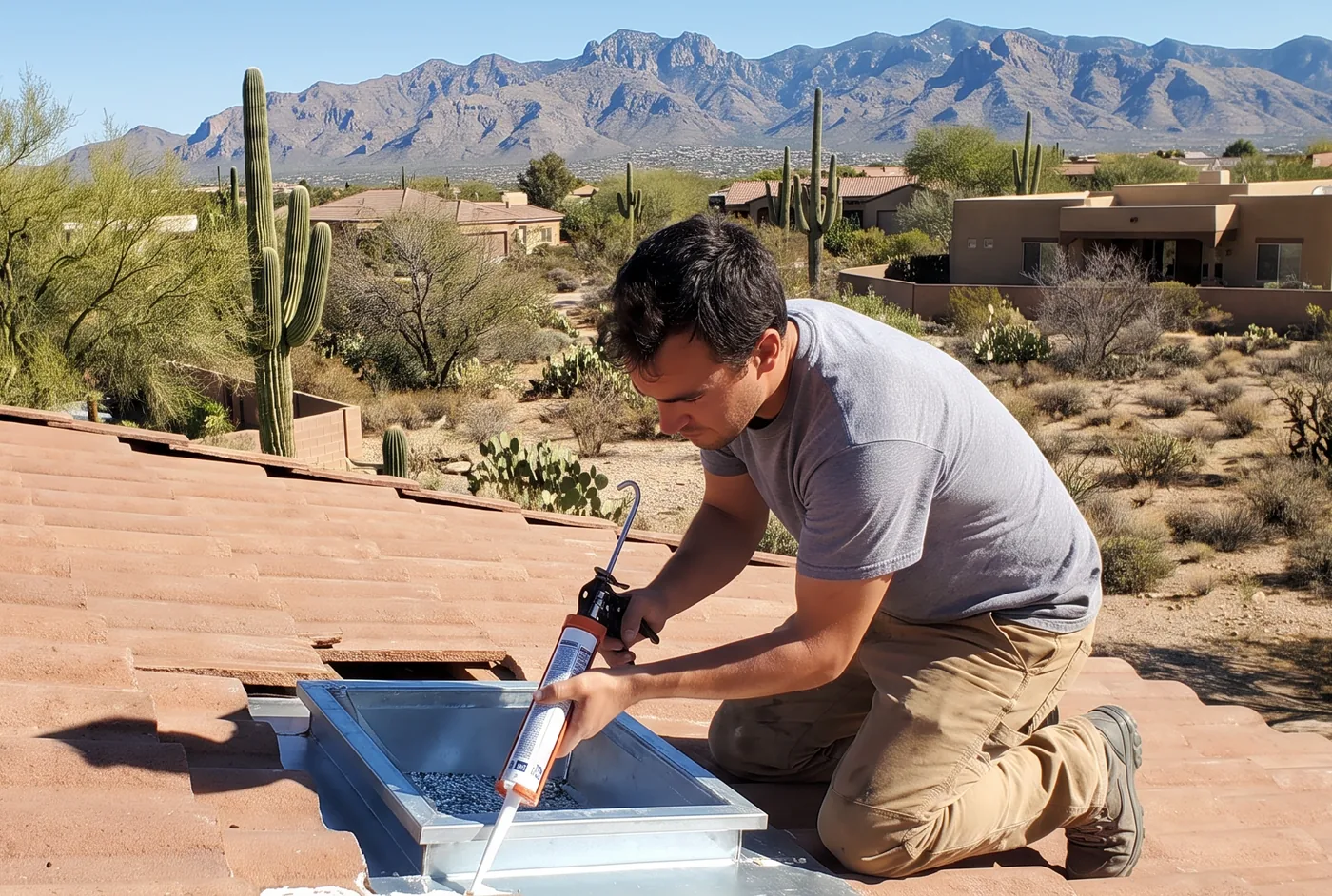
Once we've confirmed the source, the repair stays localized to the skylight opening whenever possible - most Tucson skylight problems don't require tearing into the broader roof system. That usually means removing and replacing deteriorated sealant, securing or replacing damaged flashing sections, and resetting the skylight if it's shifted. Sometimes the skylight itself is beyond repair - a cracked acrylic dome or delaminated glass unit after years of desert UV exposure - and in that case we'll talk through replacing just the skylight unit before disturbing any roofing material. After the exterior work, we check from inside the house too, looking at the drywall around the shaft for lingering moisture or soft, discolored patches, to confirm the repair actually solved the leak instead of just hiding it. If what we find points to something beyond the skylight itself, we'll walk you through a full roof inspection before recommending anything further.
Skylight Repair Cost Factors
Skylight repair pricing in Tucson isn't a flat, published rate, because the work varies widely from one roof to the next. The same symptom - a ceiling water stain - can come from a simple reseal, a full reflash, a cracked dome replacement, or a complete unit and curb replacement. Estimating over the phone without an inspection usually leads to numbers that don't hold up once we're actually on the roof.
Roof pitch and access matter. Steep tile roofs common in the Catalina Foothills and Oro Valley need more setup time and fall protection than a low-slope shingle roof in midtown. Tile flashing labor is generally more involved than shingle flashing too - tiles have to be lifted, sometimes cut, and reset without cracking, while shingle flashing can often be tucked and resealed more quickly. Prior water intrusion changes the job as well: if moisture reached the decking or attic insulation around the skylight shaft, that damaged material has to be addressed before the skylight is resealed, which adds labor beyond a repair limited to the glazing or seal. Glazing replacement itself is priced separately from flashing work, since it means ordering a compatible panel for the unit's specific make and model.
Before you sign off on an estimate, ask whether it covers resealing or reflashing only, and whether it accounts for possible decking or insulation damage found after the unit is opened. Ask if the quote is based on tile or shingle labor, and whether it includes an allowance for tile breakage. Ask if the glazing panel will be reused or needs replacing, and whether that's priced as its own line item. And ask what happens to the price if hidden water damage turns up mid-repair. Those questions put every estimate on equal footing so there are no surprises once a crew is on your roof.

David Contreras, Owner & Founder - DC Roofing of Arizona · Licensed ROC #328733 · Tucson native since 1989
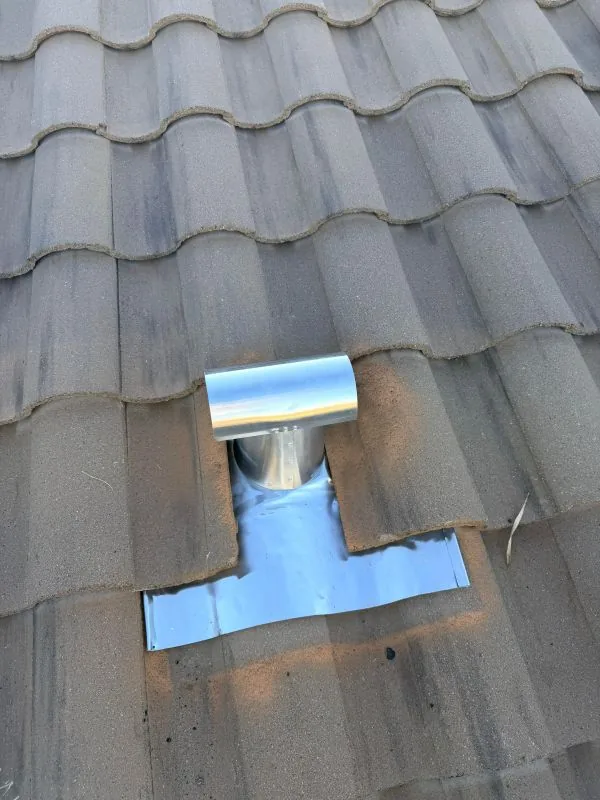
Skylight Repair Projects Completed in Tucson
How Our Skylight Repair Process Works
- 1
Interior and Roof Assessment
We start by checking the ceiling and attic space around the skylight for staining, soft spots, or daylight gaps. If it's safe, we get up on the roof to examine the curb, flashing, and surrounding tile or shingles before touching anything.
- 2
Source Diagnosis
We check the glazing for UV clouding or cracks, inspect flashing seams for rust or lifted edges, and trace nearby penetrations that could be the real source of a stain we're seeing indoors. We photograph everything we find.
- 3
Honest Assessment
We tell you straight whether it's a simple seal repair or something bigger tied to the surrounding roof. If a straight repair handles it, that's what we recommend - we don't push a bigger job than the roof needs.
- 4
The Repair Itself
Deteriorated sealant gets removed and replaced, damaged flashing sections get secured or replaced, and the skylight gets reset if it has shifted. If the unit itself needs replacing, we handle that too.
- 5
Interior Check and Walkthrough
We check the drywall around the skylight shaft from inside for lingering moisture or soft patches, confirming the repair solved the leak instead of just hiding it. Then we walk you through what we did and what to watch for.
Ready to Get Started?
Fast response. Licensed ROC #328733. 4.9★ across 100+ Google reviews.
Skylight Repair Services We Provide in Tucson and Southern Arizona
What Tucson Homeowners Gain from Choosing DC Roofing of Arizona
Skylight Repair in Tucson, Oro Valley, Marana, Sahuarita, Green Valley, and Vail
DC Roofing of Arizona provides skylight repair services throughout Southern Arizona, including:
Frequently Asked Questions About Skylight Repair in Tucson
How fast can you get someone out to look at a leaking skylight in Tucson?
We schedule most skylight inspections within a day or two of your call, sooner if a monsoon storm just hit. Leak calls spike right after the first big storm of the season, so booking early helps you avoid the rush. If you notice staining or daylight gaps before the rain starts, calling ahead often means we can fix a small seal problem before it becomes a bigger repair.
What happens when a technician comes out to inspect my skylight?
We start on the roof, not inside your house. A technician checks the skylight curb, the flashing, and the tile or shingles around it before touching anything indoors. On tile roofs, that often means pulling back tile to look at the underlayment underneath, since that's usually where the real wear is hiding. We'll walk you through what we find and tell you straight whether it's a simple seal repair or something bigger tied to the roof itself.
Why does my skylight only leak after it rains, not any other time?
This usually means a seal that broke down slowly, not sudden storm damage. Tucson's UV rays and heat cycling dry out rubber gaskets and sealant during the long dry months, leaving them brittle by the time monsoon season arrives. The first hard rain just finds the weak spot that had been forming for months - that's why so many leak calls come in right after the first big storm, even though the skylight seemed fine all summer.
Is the water around my skylight condensation or an actual leak?
Condensation usually shows up on cool mornings and dries up by noon, while a real leak tracks with rain. If you run an evaporative cooler, humid indoor air can settle on the cold glass overnight and leave moisture on the frame, not the drywall. A leak spreads and leaves darker stains over time, and shows up during or after storms. If the moisture disappears once the sun's up, you likely don't need a repair yet.
Do I need a full roof repair or just a skylight fix?
It depends on what's happening around the skylight, not just at the frame itself. On a tile roof, if the sealant is cracked but the surrounding tile and underlayment are still solid, it's usually a straight repair. If we find multiple leak spots, brittle tile, or underlayment failing in more than one area, that points to a bigger job. We'll always tell you which situation you're in before we start, so you're not paying for more than the roof needs.
Can a skylight really be fixed without replacing the whole unit?
Yes - most skylight leaks in Tucson come from failed seals or sealant, not a broken dome or frame. Roofs under 15 years old with isolated staining are almost always fixable with a straight repair. Older tile roofs, past 20 years, with soft spots or granule loss nearby may need a broader inspection first. If the glazing and frame are still in good shape, replacing the seal and flashing usually solves the problem without a full replacement.