Expert EPDM Roofing for Tucson & Southern Arizona
David Contreras, owner of DC Roofing of Arizona, has been installing and repairing flat roofs in Southern Arizona since 2011. That experience means he has seen firsthand how Tucson's extreme heat, intense UV, and monsoon rains destroy the wrong roofing membrane - and how EPDM rubber, when installed correctly, holds up where rigid or adhesive-based systems fail. DC Roofing of Arizona (ROC #328733) handles EPDM roofing for commercial and residential flat roofs throughout the Tucson area.
Watch: DC Roofing of Arizona in Action
Why Tucson Flat Roofs Demand a Flexible Membrane
Most people don't think about what heat does to a roof surface. The short version: it moves. A flat roof in Tucson can hit 170°F on a July afternoon, then drop 50 degrees overnight. That cycle happens day after day, month after month. Every material on that roof expands and contracts. Rigid materials crack. Seams pull apart. That's where leaks start.
EPDM roofing handles this because the membrane itself is rubber. It stretches and contracts with the building instead of fighting it. The material's flexibility across extreme temperature ranges - from Tucson's summer highs above 110°F to winter nights below freezing - is one of its core strengths. We see this often on commercial properties near Broadway and downtown. Older buildings with parapet walls and multiple HVAC penetrations take a beating from thermal cycling, and a stiff membrane just can't keep up.
Monsoon season brings a different kind of stress. Driving rain pools on flat roofs, especially if drains are slow or scuppers are undersized. Ponding water is one of the top causes of flat roof failure. A flexible membrane like EPDM can sit under standing water without breaking down the way some coatings or built-up systems do. Tucson also gets over 300 days of sunshine a year - that constant UV exposure breaks down many roofing materials faster than you'd expect, but EPDM has natural UV resistance built into the rubber compound.
- Thermal cycling creates constant expansion and contraction stress on seams
- Monsoon rain can pool for hours or days on low-slope surfaces
- UV radiation breaks down rigid materials faster in the desert
- Evaporative cooler penetrations create extra weak points that need flexible flashing
Signs Your Flat Roof Needs EPDM Replacement, Not Just a Coating
Sometimes a coating restoration will buy you another five or ten years. But sometimes the roof is past that point, and putting a coating over a failing surface is just throwing money at a problem that's going to come back worse. Here's what David looks for when he inspects flat roofs across Tucson.
- Multiple active leaks in different spots. One leak near a penetration might be a simple fix. Three or four leaks spread across the roof tells us the membrane itself is done.
- Bubbling or blistering across large areas. Small blisters can be patched. But when you've got bubbling over 30% or more of the surface, moisture is trapped underneath. A coating won't fix that.
- Membrane that's brittle or cracking when you press on it. Tucson's UV exposure is brutal. Years of 100-plus degree summers break down older roofing materials until they literally crumble in your hand.
- Ponding water that never fully drains. Standing water after monsoon storms speeds up deterioration. If your roof holds puddles for 48 hours or more, a coating alone won't solve the structural issue underneath.
- Seams pulling apart. This one's a dead giveaway. Once seam adhesion fails in multiple places, the roof has lost its ability to keep water out as a system.
We see a lot of older flat roofs in the Sam Hughes and Armory Park neighborhoods. Many were built in the 1950s and 60s with materials that just can't handle another round of patching. When we find three or more of these signs together, EPDM roofing is the right call over a coating. See our flat roof repair page for more on how we approach aging flat roof systems.
If a coating will genuinely hold up for you, we'll say so. David comes out personally to every inspection, walks the roof, and gives you a straight answer.
EPDM Installation Methods: Fully Adhered, Mechanically Fastened, and Ballasted
Not every EPDM installation is the same. David selects the attachment method based on the building's structure, wind exposure, and deck type. Fully adhered systems bond the membrane directly to the substrate with bonding adhesive - this is the most common method for commercial roofs in Tucson and provides the best resistance to wind uplift and membrane flutter. Mechanically fastened systems use screws and plates along seams and at the perimeter; they're faster to install and work well on wood-deck structures. Ballasted systems use river rock or pavers to hold the membrane down - appropriate on concrete decks where penetrations need to stay minimal, though less common in Tucson due to weight and seismic considerations.
EPDM membrane thickness typically comes in 45 mil, 60 mil, and 90 mil. Heavier-traffic roofs with frequent HVAC access warrant thicker membrane. On most commercial applications in Tucson, 60 mil is the baseline, with 90 mil specified for high-traffic or high-abuse situations.
Seam treatment is where the job is won or lost. Older EPDM systems used contact cement adhesive at seams - reliable when properly applied, but vulnerable to delamination as the adhesive ages under Tucson's thermal cycling. Modern installations use EPDM seam tape applied under pressure with a hand roller, which provides a more consistent and durable bond. Unlike TPO, EPDM cannot be heat-welded; tape and adhesive are the correct seam methods for this material. Any contractor proposing heat welding on EPDM is using the wrong technique.
How to Verify You Are Getting a Legitimate EPDM Install
You shouldn't have to guess whether your EPDM roofing was done right. Here's what to check once the job is done:
- Seam integrity. Every seam should be fully bonded with no fishmouthing, no wrinkles, no gaps. Run your hand along the seams. They should feel flat and tight.
- Flashing at penetrations. Pipes, vents, HVAC curbs, evaporative cooler mounts - each one needs properly cut and sealed flashing boots or membrane wraps. Every penetration is a potential leak point.
- Edge termination. The membrane should be secured at every edge with proper termination bar or drip edge.
- Drainage. Water should move toward drains or scuppers. Standing water 48 hours after rain means the slope wasn't addressed before the membrane went down.
- Clean, smooth substrate. EPDM needs a clean surface. Debris underneath causes punctures over time.
Ask for documentation. A legitimate installer will give you a written scope of work, photos of the substrate prep, and details on the adhesive or fastening method used. Verify your contractor's license with the Arizona Registrar of Contractors. Our ROC number is #328733. Any contractor doing EPDM roofing in Tucson should be able to hand you that number without hesitating.
EPDM vs. TPO: Choosing the Right Membrane for Your Tucson Roof
When an EPDM roof has reached end-of-life in Tucson, building owners frequently ask whether to replace in-kind with EPDM or switch to TPO. The honest answer depends on the building's cooling loads, budget, and long-term ownership plans. White TPO's reflectivity advantage - surface temperatures 50–70°F lower than black EPDM - makes it the better choice for building owners planning to hold the property long-term and minimize cooling costs. For budget-constrained projects where lowest upfront cost matters most, EPDM in-kind replacement can still be appropriate. David will price both options and walk you through the trade-offs for your specific building.
Keeping Your EPDM Roof Performing Through Monsoon Season and Beyond
EPDM roofing lasts a lot longer when you stay ahead of Tucson's weather instead of reacting to it. Monsoon season hits hard from June through September - driving rain, sudden wind gusts, debris flying off mesquite trees. One small separation at a seam can let water pool underneath the membrane, and you won't notice until there's a stain on your ceiling. We see this every week during monsoon months on commercial buildings near Broadway and downtown Tucson.
- Clear debris off the membrane after storms so water drains properly
- Check seams and lap edges for lifting or separation twice a year
- Inspect flashing around any penetrations like evaporative cooler mounts or pipe boots
- Look for ponding water that sits longer than 48 hours after rain
- Schedule a professional roof inspection before monsoon season starts
David comes out personally for maintenance inspections and checks every detail himself. Routine maintenance can extend a roof's service life by years. A good elastomeric or silicone coating applied to a well-adhered EPDM membrane can add 10+ years of service at significantly less cost than full replacement - see our roof coating page for more. A little attention now saves a big headache later. That's just how roofing works in the desert.
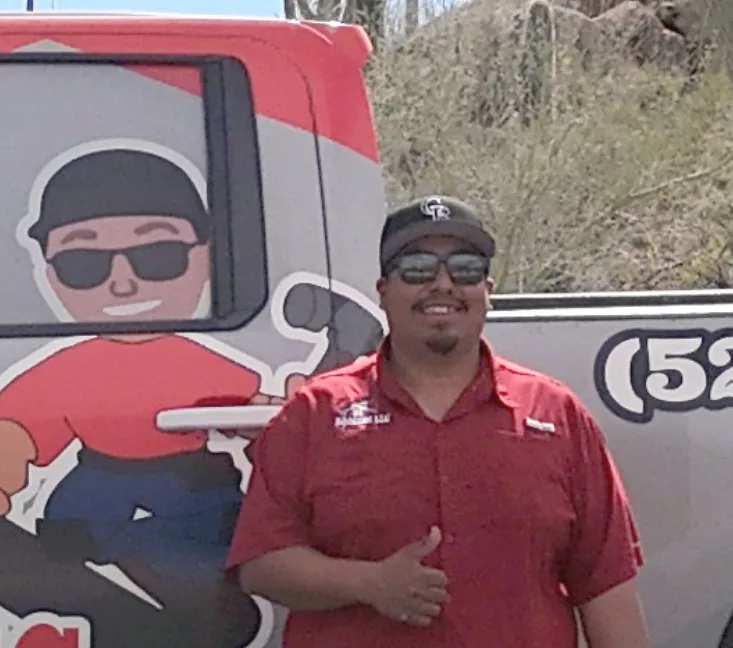
David Contreras, Owner & Founder - DC Roofing of Arizona · Licensed ROC #328733 · Tucson native since 1989
EPDM Roofing Projects Completed in Tucson

How Our EPDM Roofing Process Works
- 1
Strip and Inspect the Deck
We remove the old membrane or built-up roofing down to the substrate, then check every inch of the deck for rot, soft spots, or damage from past leaks. On older buildings in neighborhoods like Armory Park, deteriorated decking shows up more often than you'd expect. Any damaged plywood or OSB gets replaced before anything else happens.
- 2
Install Insulation and Cover Board
Proper insulation goes down first, then a cover board on top to protect the EPDM membrane from screw heads and rough surfaces beneath it. Skipping the cover board is how membranes get punctured from the underside long before their time.
- 3
Roll Out and Attach the EPDM Membrane
We position the rubber sheet across the roof with proper overlap at every seam. Depending on the building's structure and wind exposure, we use fully adhered bonding adhesive, mechanical fasteners, or - on appropriate concrete decks - ballast. On most Tucson commercial roofs we can cover large sections with a single sheet, which means fewer seams and fewer potential leak points.
- 4
Seal Every Seam and Flashing Detail
This is where the job is won or lost. We prime each seam, apply EPDM seam tape under pressure, then roll it tight. Flashing goes around every penetration, every parapet wall, every pipe boot. Evaporative cooler penetrations get extra attention because they're one of the most common leak sources we deal with on Tucson flat roofs.
- 5
Final Inspection and Walkthrough
We inspect the finished membrane, probe every seam, and verify drainage before cleaning the site. Our crews don't leave debris behind. David does a walkthrough with you before we leave so you know exactly what was done and where.
Ready to Get Started?
Fast response. Licensed ROC #328733. 4.9★ across 100+ Google reviews.
EPDM Roofing Services We Provide in Tucson and Southern Arizona
What Tucson Homeowners Gain from Choosing DC Roofing of Arizona
EPDM Roofing in Tucson, Oro Valley, Marana, Sahuarita, Green Valley, and Vail
DC Roofing of Arizona provides epdm roofing services throughout Southern Arizona, including:
Frequently Asked Questions About EPDM Roofing in Tucson
How long does an EPDM roof installation take in Tucson?
Most EPDM installations on Tucson flat roofs take one to three days, depending on roof size and deck condition. A straightforward commercial job with no major substrate damage moves quickly. If we find deteriorated decking underneath - which happens often on older buildings - repairs add time before the membrane goes down. We always tell you upfront what we find so there are no surprises mid-job.
Can you put EPDM over an existing flat roof, or does the old material have to come off?
In most cases, the old material needs to come off before EPDM goes down. Laying a new membrane over a failing surface traps moisture underneath and leads to bigger problems later. If the existing roof has bubbling, brittle areas, or seams pulling apart, a tear-off is the right call. On some roofs in good structural shape, a recover is possible - but we check the deck condition first before recommending either option.
Does EPDM roofing hold up to Tucson's monsoon season and extreme heat?
Yes - EPDM handles both better than most flat roofing materials. The rubber membrane stretches and contracts through Tucson's daily heat swings instead of cracking at the seams. During monsoon season, EPDM can sit under standing water without breaking down the way coatings or built-up systems often do. That combination of heat flexibility and water resistance is exactly why we recommend it for so many flat and low-slope roofs across Tucson.
What are the most common spots where EPDM roofs leak in Tucson?
Seams and penetrations are where most leaks start. Evaporative cooler curbs are one of the biggest problem areas we see - the constant vibration and weight stress the flashing over time. Parapet wall edges and pipe boots are close behind. Tucson's thermal cycling puts constant pressure on every seam, so any area that wasn't sealed correctly from the start will eventually show it. Proper flashing detail at every penetration is what separates a roof that lasts from one that doesn't.
How do I know if my flat roof needs full EPDM replacement or just a coating?
If you have multiple leaks in different spots, large areas of bubbling, or seams pulling apart in several places, a coating won't solve the problem. Coatings work on roofs that are structurally sound but showing early wear. Once the membrane itself is brittle or moisture is trapped underneath, you need a full replacement. We walk every roof before recommending anything - if a coating will genuinely hold up, we'll tell you that instead.
Is EPDM or TPO better for a flat roof in Tucson?
For new installations, white TPO is generally the better choice in Tucson due to its superior solar reflectivity - surface temperatures run 50–70°F cooler than black EPDM, which lowers cooling costs meaningfully in the desert. TPO also uses heat-welded seams, which are more durable than EPDM's adhesive or tape seams under Tucson's thermal cycling. That said, EPDM in-kind replacement is still appropriate for budget-constrained projects. David will price both options and walk through the trade-offs for your specific building.
How long does EPDM roofing last in Tucson?
Quality EPDM installed correctly in Tucson typically lasts 20–30 years. The main factor shortening lifespan here is thermal stress on adhesive seams from extreme temperature cycling. Modern installations use EPDM seam tape rather than contact cement, which provides a more consistent and durable bond. Annual inspections help catch seam issues before they develop into leaks, and a compatible elastomeric or silicone coating at the 15–20 year mark can extend service life significantly.
Do Tucson building codes require a permit for EPDM roof replacement?
Most full roof replacements in Tucson require a permit through the City of Tucson Development Services. A simple repair or coating usually does not. Pulling the right permits protects you when it comes time to sell the property or file an insurance claim. We handle the permit process as part of the job so you don't have to chase paperwork yourself.