Expert Roof Ventilation for Tucson & Southern Arizona
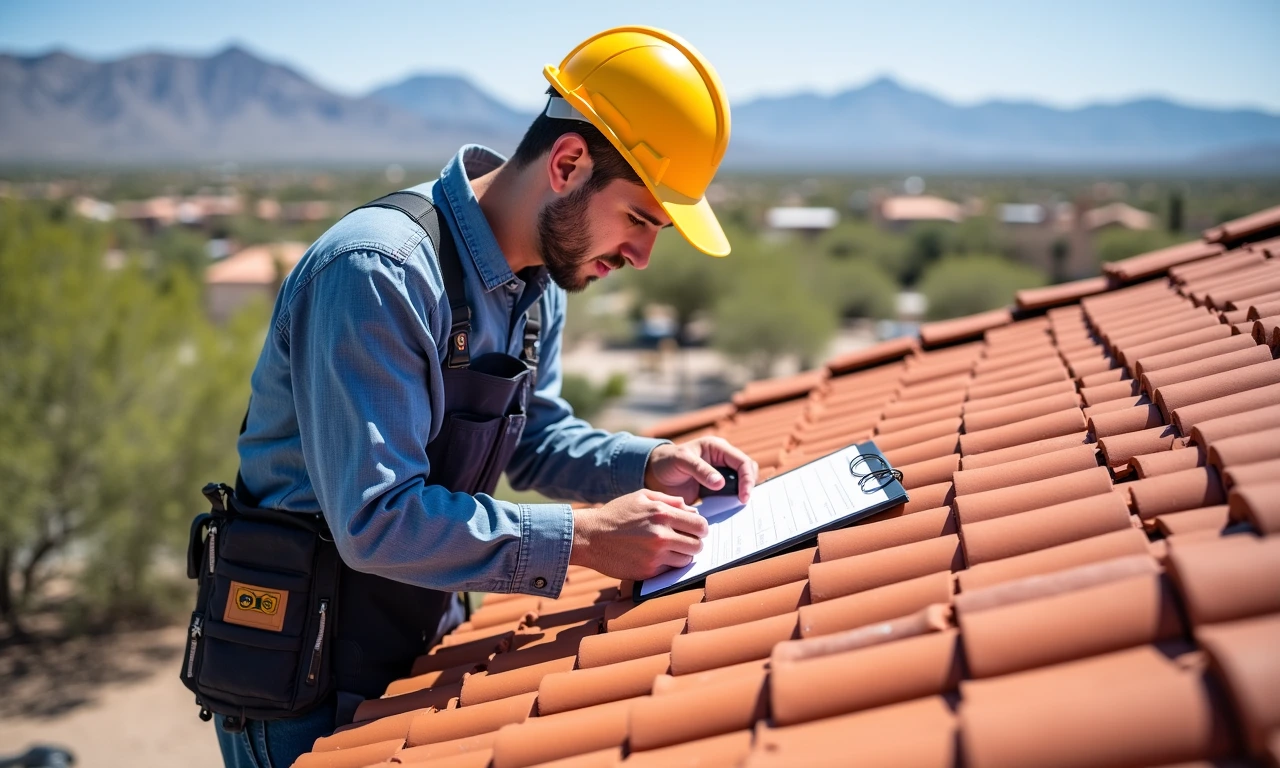
David Contreras, owner of DC Roofing of Arizona, has been diagnosing and fixing roof ventilation problems in Tucson since 2011. Poor attic ventilation is one of the most common causes of premature roofing failure we see - and it's one of the most underdiagnosed. DC Roofing of Arizona (ROC #328733) checks ventilation on every roof inspection we do, because in Tucson's climate, getting airflow right is as important as the roofing material on top.
Watch: DC Roofing of Arizona in Action
Signs Your Attic Ventilation Is Failing
Most folks don't think about their attic until something goes wrong inside the house. A hot upstairs room that won't cool down. A weird musty smell near the hallway ceiling. Paint bubbling along the eaves. A spike in your energy bill during summer months. These are the things that make people pick up the phone - and a roof ventilation problem is often hiding in plain sight behind all of them.
Here's what we tell homeowners in Tucson to watch for: your AC runs nonstop but upstairs stays hot - when attic air can't escape, that trapped heat radiates down through your ceiling. We've measured attic temps above 160°F in midtown Tucson homes with blocked soffit vents. Cracked or curling shingles well before their expected lifespan - heat baking from above and below destroys roofing material fast. Dark staining or moisture marks on attic rafters - that's condensation, meaning warm air is sitting still instead of cycling out. And peeling exterior paint near the roofline - moisture that can't vent through the roof pushes outward through fascia and soffits.
Some of these signs show up slowly - you might notice your electric bill creeping up over two or three summers before it clicks. Others are sudden. We had a homeowner over near Sam Hughes call us because their hallway ceiling felt warm to the touch on a June afternoon. Turned out their ridge vent had been sealed over during a previous roof coating job. No airflow at all.
How Tucson's Climate Creates a Two-Phase Ventilation Problem
Most roofing advice is written for places with snow and rain. Tucson doesn't work that way. We deal with two distinct seasons that each attack your roof ventilation differently.
Phase one is the long dry heat. From April through early June, your roof surface can hit 160°F or more on a clear afternoon. That superheated air gets trapped in your attic space. Without proper roof ventilation pulling it out, your attic becomes an oven sitting right on top of your living space. We see this constantly in neighborhoods like Midvale Park and the Broadmoor area, especially in older homes where the original vents were undersized or partially blocked over the years. Your AC runs harder, your energy bills climb, and the heat slowly cooks your underlayment and decking from the inside out.
Then monsoon season hits. Suddenly you've got humidity spiking, driving rain coming sideways, and temperature swings of 30 degrees in an hour. Your ventilation system now has a different job - it needs to move moisture-laden air out before condensation forms on the underside of your roof deck. We've pulled back tiles on Tucson homes and found wet sheathing and mold starting along the rafters, all because the ventilation couldn't keep up with the moisture shift.
Here's what makes it tricky: a setup that works great for summer heat exhaust might let rain blow into your attic during a monsoon storm. A system sealed tight enough to block wind-driven rain might not move enough air during those brutal dry months. You need both problems solved at once. That two-phase reality is why cookie-cutter ventilation installs don't hold up here.
Flat Roofs and Older Homes Need a Different Ventilation Strategy
Most roof ventilation advice assumes you've got a peaked roof with an attic. But a huge number of homes in Tucson don't fit that mold. Flat roofs and low-slope designs are everywhere here, especially in neighborhoods like Barrio Viejo and midtown. Older homes built in the 1950s through 1970s often have little to no ventilation built in at all.
Flat roofs trap heat differently than sloped ones - there's no natural chimney effect pulling hot air upward and out through a ridge. Heat just sits there, baking the roof deck from above while your AC fights it from below. We see this constantly on older block-construction homes throughout Tucson. The interior stays hot no matter how hard the system runs.
The approach has to change. You can't slap a ridge vent on a flat roof. Instead, we look at options that move air mechanically or create ventilation pathways where none exist: powered attic ventilators that pull trapped heat out through the roof deck; soffit-to-parapet airflow channels on roofs that have enough pitch to create movement; strategic placement of low-profile vents near the highest point of the roof slope; and insulation adjustments that work alongside ventilation instead of blocking it. We often find that someone added insulation and accidentally sealed off whatever airflow the original design allowed. Good intention, bad result.
David grew up around these homes. Our crew works on flat roofs and older construction every week, so we know where the trouble spots hide. We check the parapet walls, the scupper drains, and the areas around evaporative cooler penetrations - all of it factors into how air moves through the roof assembly.
The AC-Ventilation Connection Most Homeowners Miss
Your AC isn't struggling because it's old. The real problem is sitting right above it. Tucson hits 110 degrees outside, and your attic can reach 150 or higher. That trapped heat doesn't just sit there - it pushes down through your ceiling and into your living space. Your AC fights against it all day long, cycling harder and running longer than it should. You feel it in your energy bill every month from May through September, and most people blame the AC unit itself.
But roof ventilation is the actual fix. When hot air has a clear path out of your attic, the temperature up there drops dramatically. We've seen attic temps fall 30 to 40 degrees after installing proper intake and exhaust vents on homes in the Sam Hughes neighborhood. That's less heat pressing down on your ceilings, less work for your AC, and real money back in your pocket. Before you spend thousands on a new AC system, let us check what's going on above your ceiling first. The answer might be simpler and cheaper than you think.

David Contreras, Owner & Founder - DC Roofing of Arizona · Licensed ROC #328733 · Tucson native since 1989
Roof Ventilation Projects Completed in Tucson
How Our Roof Ventilation Process Works
- 1
Ventilation Assessment
David comes out first, walks the roof, and checks the attic space. We calculate your attic's volume, measure current free-area ventilation at ridge and soffits, and identify imbalances - too much exhaust relative to inlet is as problematic as too little.
- 2
System Design & Recommendation
Every roof is different, so we don't show up with a one-size-fits-all plan. Based on the assessment, we recommend the right combination of ridge venting, soffit improvements, turbine additions, or power ventilators for your specific home and roof type.
- 3
Protect the Property and Mark Cut Locations
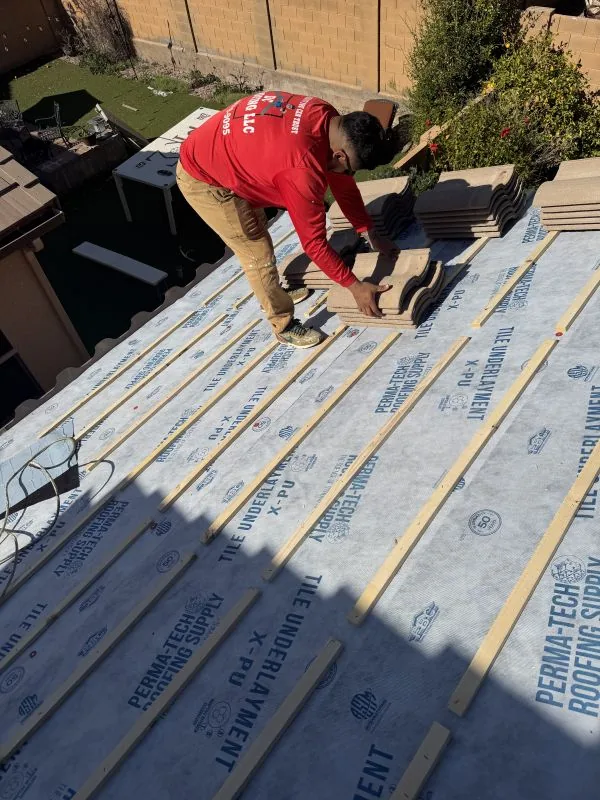
Before any cuts are made, we cover landscaping, patio furniture, and anything below the work area. We mark cut locations on the roof deck based on rafter spacing and the layout mapped during inspection.
- 4
Install Vents and Tie In Intake
We cut openings, install the vents, and seal everything to the existing roofing material. On tile roofs, that means pulling tiles, setting the vent, and re-laying tiles so the profile matches. We tie new intake vents into the soffit or eave area if the current intake is blocked or missing.
- 5
Final Airflow Check and Cleanup
We run a final check from inside the attic to confirm airflow is pulling through the way it should. The biggest issue we find isn't the vent itself - it's something blocking the air path below it. Insulation stuffed into soffits, old baffles that collapsed, paint sealed over intake screens. We fix all of that during the install.
Ready to Get Started?
Fast response. Licensed ROC #328733. 4.9★ across 100+ Google reviews.
Roof Ventilation Services We Provide in Tucson and Southern Arizona
What Tucson Homeowners Gain from Choosing DC Roofing of Arizona
Roof Ventilation in Tucson, Oro Valley, Marana, Sahuarita, Green Valley, and Vail
DC Roofing of Arizona provides roof ventilation services throughout Southern Arizona, including:
Frequently Asked Questions About Roof Ventilation in Tucson
How do I know if my attic ventilation is causing my upstairs to stay hot?
If your upstairs stays hot even when your AC runs nonstop, trapped attic heat is likely the cause. Attic temps in Tucson homes can exceed 160°F when soffit vents are blocked or undersized. That heat radiates straight down through your ceiling into your living space. Other signs include cracked shingles earlier than expected, peeling paint near the roofline, and a spike in your summer energy bill. A quick attic inspection can confirm what's going on.
Does Tucson's monsoon season affect how roof ventilation should be set up?
Yes, and this is where a lot of ventilation installs fall short in Tucson. The dry heat phase from April through early June demands strong airflow to exhaust superheated attic air. Then monsoon season brings humidity and wind-driven rain that your vents also need to handle. A setup built only for heat exhaust can let rain blow into your attic during a storm. Your ventilation plan needs to solve both problems at once, not just one season.
Can a flat roof be properly ventilated, or is it just always going to be a problem?
Flat roofs can be ventilated properly, but the approach is completely different from a sloped roof. There is no ridge to vent, so you need powered attic ventilators, low-profile vents near the highest point of the slope, or soffit-to-parapet airflow channels. Many older Tucson homes in areas like Barrio Viejo have block construction with little original ventilation built in. We also check for insulation that was added later and accidentally sealed off whatever airflow the roof originally had.
What happens during a roof ventilation inspection?
We check the attic space, soffit vents, ridge vents, and any roof penetrations like evaporative cooler mounts. We look for blocked intake vents, sealed ridge vents, moisture staining on rafters, and signs that previous work may have cut off airflow. On flat roofs, we also check parapet walls and scupper drains. The whole inspection usually takes under an hour. At the end, we tell you exactly what we found and what, if anything, needs to be fixed.
A previous roofer sealed my ridge vent during a coating job. Is that a big deal?
Yes, that is a serious problem. A sealed ridge vent means zero exhaust airflow, and your attic has no way to release trapped heat or moisture. We have seen this exact situation in Tucson homes, including one in Sam Hughes where the hallway ceiling felt warm to the touch in June. The fix usually involves reopening or replacing the ridge vent. It is a straightforward repair once you know what happened, but the damage to shingles and decking can add up fast if it goes unaddressed.
How does poor roof ventilation affect my energy bills in Tucson summers?
Poor ventilation forces your cooling system to fight heat coming from two directions at once. Your AC pulls heat out of your living space while your attic dumps more heat back down through the ceiling. Tucson homeowners sometimes notice their electric bills creeping up over two or three summers before they connect it to the roof. Fixing the ventilation reduces that heat load, so your AC does not have to run as long or as hard to keep the house comfortable.